1.
Picking up a newspaper—as I so rarely do these days, shame on me, I know—I have a tendency to weigh it in my hand, as if I could tell its health just by feel. In a sense, I suppose I can. You can feel the weight loss, the way advertisers are being shed like fat, then precious muscle tissue. Sense the creeping desiccation. The poor things are withering away, right in my own hand, I can feel it. I can barely stand to flip through them these days. It’s like pawing a corpse.
I consider the two major local dailies. The local tabloid chugs along, fed on a steadily diminishing diet of used car ads. Due to its combination of slight content and mild titillation, it sustains its readership numbers on a middle-aged male populace that apparently has little interest in the Internet or television. The font seems to grow bigger with every passing year, clearly indicating the paper knows its core readership is starting to enter old age. Its front page typically alternates between a sports figure of some sort in the midst of a feat of athletic fortitude, a bikini-clad lady holding cash for a prize giveaway, or something simply blowing up. Headlines are typically stark evocations of violence, the typographical equivalent of a gun pointed at your head: “Baby dead!”, “Riot!”, “Decapitated!”, etc (headlines may not be exact, but you get the idea—death and exclamation points, basically). The other local daily’s survival efforts are hamstrung by its own sense of propriety. Its most recent gambit is to place bar codes on every section that can then be scanned by cell phones, allowing you the convenience of not reading the paper wherever you are.
Obviously, these publications are far too depressing to read with any regularity. Not necessarily because of the news contained within, but because each carries the gangrene stink of a wounded animal. Every page feels printed with the knowledge of its own redundancy. Every section is the obituary section now.
2.
When I wish to see my fingers stained with ink, I bypass these poor, doomed papers (called “rags” in their prime, the term “shrouds” now fits better). Instead, I turn to a little weekly newspaper known as the Fort Nelson News.
I do not wish to suggest that this humble publication can stave off the demise of the printed paper; it can no more change the inevitable than a steerage passenger could have saved the Titanic. But in its cheaply printed pages, a mixture of murky blacks and gaudy explosions of colour, it captures the quickly vanishing pleasures of reading the paper. The Fort Nelson News is not a rallying cry for a beleaguered medium—it is a eulogy.
Admittedly, sometimes it bores me, as any respectable eulogy would do at some point (the whole thing can’t just be crazy anecdotes from college, after all). As well, I do not live in Fort Nelson, nor have I ever been to that surely lovely town. Headlines like “New program minimises wood waste in northeast” do not tantalize my curiosity.
Nor is this a particularly beautiful example of the art of newspaper making. Full pages of ads look like several different jigsaw puzzles mixed together—the ad sizes are purely random, leading to jumbles of rectangles adrift in pools of white space. Titles are haphazardly inserted into wherever there is space on the page. Every photo is stretched and distorted, all the smiling citizens looking as if someone had just crushed their heads in vices. The poor print quality turns all of these squished faces a troubling shade of purple-blue, creating the fascinating possibility that there is a glass dome over the town and everyone is slowly running out of air (perhaps the faces are distorted because the pictures have been taken by someone outside the dome…ah, it all falls into place now, the strange town under glass, the citizens, delirious, smiling as they slowly die of asphyxiation—we could all learn something from their graceful acceptance of the inevitable).
The whole thing is conducted with an air of moxie and enthusiasm, the ramshackle charm of some small towners saying, “Let’s put on a show!” One likes to imagine the undoubtedly plucky crew of this newspaper periodically bursting into song. And why not? Most big-city print media types can barely find the spirit to hum a dirge these days, never mind spout a merry tune. But the Fort Nelson News feels vital—and most remarkable of all—necessary.
Where else, for instance, will you find out about that new program minimizing wood waste in the northeast? The giants of the print world find themselves in a fracturing mediascape, competing for a smaller fraction of the audience against a growing legion of rival news sources (television, radio, the Internet). Increasingly, any sort of interaction with the media feels like entering a crowded market where the customers are outnumbered by the vendors, all of whom are shouting for your attention. It’s a bewildering, overwhelming chaos, and unsurprisingly, people are just as likely to tough it out as they are to leave the market altogether and fritter away a couple of hours each night on one of those Tumblr blogs about Tom Selleck or funny cats or whatever.
Do they even have the Internet in Fort Nelson? (I’m guessing not, considering the giant glass dome and all.) Small towns are where the old-fashioned newspaper still serves a necessary purpose. Relics in a big city, newspapers in a small town still serve as the primary chroniclers of area news. No other media competes for the reader’s attention in Fort Nelson, no evening newscast or robust online aggregators. Where else can you turn to find out that the Fort Nelson Rod and Gun Club is closed to the public May 31st and June 1st-3rd? (For more information contact Dwayne.) The strongest competitor to the Fort Nelson News is the bulletin board at the entrance of the local grocery store.
3.
As the employee of a company that is owned by another company, which owns another company, which owns scads of small-town newspapers across western Canada, I was startled to see that small-town weeklies would even be on the map of any corporation. But who competes with the Fort Nelson News? Small towns might well be the last frontier open to dominance by print media (and within that frontier, the Fort Nelson News is a rare example of complete independence—whatever maps they own in Vancouver and Toronto, this little northern town must not be on it).
I can only assume that the Fort Nelson News must be the primary—and perhaps only—form of news media available in the entire town. This would also help explain why the paper feels the need to do everything a newspaper can conceivably do. There are book reviews, cowboy poetry (“A seventy two point score, I know it might sound a little silly / But I won my first buckle on a white faced bull named Willy”), comic strips (who knew Broom Hilda is still going strong?), and even a birding column, which offers opportunities for starkly intriguing headlines like, “The Sex of Eddy has been Determined.” (It’s a she, and she just laid an egg, which sadly broke—that’s all the news that’s fit to print, and then some.)
And then there are the paper’s baffling aspirations to provide international coverage, which includes a syndicated column from Gwyn Dyer on various matters of importance around the globe, as well as “Bogdan Kipling, special Washington correspondent to the Fort Nelson News.” Because every small-town paper needs their own Washington correspondent. We should all have our own Washington correspondent. They’re more fun than a pet fish (we have one at the office, and all he does is hide behind his plant or float at weird angles like he’s contemplating playing dead but hasn’t decided yet).
Of course, this is probably just another syndicated column with a rather bold byline added by the editor, but let it not be said the Fort Nelson News lacks for chutzpah. It does not want to be a mere community newsletter, though it certainly fulfills that duty. No, it wants to be your source for local, provincial, national, and international news and commentary. That’s right, all wrapped up in a mere twenty or so pages once week, with talk about instability on the Korean peninsula sharing the page with news that bufflehead ducks have been spotted in the river by the post office. If nothing else, the international news provides a useful context to local events, with the violence in Gaza lending an underlying pathos to coverage of a charity hospital-bed race. This is a deeply poignant newspaper.
4.
At the heart of the paper’s charm is the tragicomic police beat column, provided by one Staff Sergeant Tom Roy, whose bemused depictions of the endless parade of drunk drivers and dim-witted petty criminals are the first thing that should be read every issue. It takes a great deal of patience and good humour to catalogue human stupidity in such detail, and the sum of Roy’s column might resemble a great novel (think of a Thomas Pynchon novel written entirely from the perspective of a straight-laced cop). It is to Roy’s credit that he uncovers new ways to describe DUIs each week.
Perhaps Roy is a frustrated writer finding relief as an archivist of debased pleasure. For evidence of his literary bent, consider this passage from Roy’s May 26th installment (enticingly titled, “Purse, Keys, Coat, Sword Stick”), in which a man is taken to the station on suspicion of cocaine dealing: “Police tested the strange white powder and watched as it turned a beautiful shade of aquamarine, sealing the man’s fate.”
Note the poetry of the police report, how the colourless sin blossoms into luminous shades of justice. The column continues, charting with guileless aplomb, a woman walking through a bar unknowingly (honestly!) concealing a sword in her walking stick, a bloody orgy, a drive-by firebombing, and finally, arson. A typical weekend in Fort Nelson, to judge by the column’s blasé tone.
5.
If that doesn’t keep you coming back each issue, then there’s always the continuing saga of the town zoning bylaws. This sordid melodrama unfolds in the dry-as-dust minutes of town council meetings and, like a classic epistolary novel, in letters printed in the editorial pages.
It began with council planning to vote on changing where zoning bylaws would allow adult businesses (that is to say, massage parlours and escort agencies) could operate in town. The moral majority—or perhaps minority, considering the evidence of Roy’s columns—naturally protested, but the council used the excuse that lawyers had advised they had no legal grounds for denying the change. One man, Councillor Doug Roper, opposed the vote, and has since become ostracized from his fellow council members.
Now the reports from council meetings are filled with signs of passive aggressive feuding amongst Roper and the rest of the council, and every few weeks sees another defiant letter to the editor from Roper, always signed with this damning appellation, “Councillor Doug Roper (not speaking on behalf of Council).” These letters are often combative, but only in the most plainspoken manner, except for occasional digressions into stranger waters. “Remember when a helicopter was called a helicopter?” begins Councillor Roper in one letter, prompting astute readers to agree, yes, they do remember when helicopters were called helicopters, as he is describing the present, which is very hard to forget. (In fairness, Councillor Roper is on his way to making a valid point about how the legal language hides the true nature of the adult businesses being allowed in town, but his rhetorical methods are somewhat baffling.)
This reminds me of my own hometown paper, which hosted a proxy letter feud concerning one lone rebel county reeve and the rest of the council, which had essentially kicked him out of government after he punched another reeve at a meeting. This sort of rawness is often missing from our sanitized national discourse, which of course affects the big-city papers that cover such news. We all know that our political representatives are filled with seething contempt for each other, bristling with anger and irrational behaviour, petty grievances and corrupt intentions. We know it because these people are no different than us, and frankly, we can all be real jerks sometimes (sorry, it’s true).
So little wonder people grow increasingly bored with the major newspapers. Now, I’m not suggesting the solution is to become tawdrier, but sanitization has certainly had an effect on our relationship to the news, and particularly newspapers. Don’t you feel alienated from politics? I know I do. That’s why I’m so strangely compelled by the political happenings in a town I’ve never been to and likely never will—when Councillor Doug Roper writes a letter, I know he wrote it, not some staff member aided by several policy analysts, with final authorization from some professional spinner or marketing expert. This is politics not yet scrubbed clean for our consumption. It’s greasy and messy but at least natural, for once, thank god. If sanitized news and rewritten press releases are increasingly the core of large newspapers, is it any wonder readers are losing interest? Print is dying, yes, but is it murder, natural causes—or suicide? (Dun-dun-dun!)
6.
I know, I know—print has been dying since the moment it was born. But it seems increasingly likely that the way we consume news is going to radically change in our lifetime. Once the older generation finally snuffs out—or else is simply too cataract-ridden to read anymore—the lowly newspaper will very likely have to be buried with it. By then, the rest of us will probably have moved on to some sort of post-literate cybertopia, where the government beams information into our dreams using chips implanted in our brains. But then again, this will probably be made moot because by the time technology reaches this point we will all be mere flesh-slaves to our hyper-intelligent iPads, which will evolve intelligence around 2021 and take control of the planet around 2026, if current projections hold true. We’ll be mindless but happy, so who needs the New York Times?
Showing posts with label Joe Wet Cow. Show all posts
Showing posts with label Joe Wet Cow. Show all posts
Tuesday, August 31, 2010

Wednesday, August 4, 2010
Hell, With Donuts
In the midst of some aimless Facebook banter once upon a time, I remarked upon my delight at discovering on Edmonton’s streets some bizarre, extremist Christian pamphlet—a sort of pet fascination of mine. (I take perverse pleasure in the sincere expression of hateful delusions, particularly those that come with titles like, “Sliding to Hell on a Church Pew” or involve impassioned, carefully argued explanations as to how and why the Pope is Satan’s bootlicking honeywhore.)
A couple of friends living in Regina chimed in to express their sorrow at never finding such literature in their own town. This led me to the obvious quip, “Regina: The most godforsaken place on Earth.”
I was being unfair, of course. Regina jokes are akin to making fun of Winnipeg for being windy or Calgary for being redneck or Toronto being the steaming asshole of Canada. Too easy, too obvious. Even worse—I had never been there before in my life.
But now I have experienced Regina firsthand and I can say with all honesty and personal, hard-earned experiential knowledge that it is truly an absolute shithole of a city, a pimple upon the backside of the prairies, waiting to be popped. “Godforsaken” feels too generous a term, as it implies God must have cared about this place at some point in order to forsake it. More likely, Regina flies under the radar of any wrathful deity, who would surely raze it out of sheer malicious boredom if it were ever worthy of attention.
Again, perhaps I am being unfair. My sojourn in Regina lasted no more than a couple of hours, while I waited for my ride to finish up some family business so that we could begin our lengthy trek back to Edmonton. For an entire hour, I simply walked around the city, trying to get a sense for its unique character. Admittedly, this is not a long time to get to know an entire city, but I was still troubled by the experience. An hour walking in Regina on a Sunday afternoon in summer is not like an hour in any other city. Time was seemingly suspended, and yet at the end of the hour I felt so much older. Everything is dusty and corroded in Regina—the streetlights, the bus stops, the buildings, and finally, tragically, my own soul.
The streets of Regina are so desolate that any human presence feels alien and threatening. I walked an hour through a commercial district and only saw a handful of other human beings, mostly clustered around an ice cream stand, which felt like a half-sunken raft of humanity. Some people were just sitting in their cars, which somehow seemed preferable to being out on the sidewalk, where carries the risk of actual human contact.
When one man did approach me, I recoiled somewhat and tried to keep walking, intimidated by this sudden and unexpected flash of social behaviour. I thought he was going to rob me. But instead he asked if I was in a hurry, because he needed help finding an address, and I realized that a mere hour in Regina is enough to harden any soul. Chagrinned at my uncharacteristic rudeness (seriously, I always try to give people directions, even when I don’t know how to guide them to their destination, which as I think about it now is perhaps not all that nice after all), I admitted to being another out-of-towner like himself, and he laughed knowingly at this, perhaps assuming that like him I was trapped in this blighted fortress of rust and plastic.
At times, I convinced myself that the city was populated not by human beings, but rather sentient cars, as this was the only real sign of movement and life I would encounter for ominous stretches of ten or fifteen minutes. These living metal beasts prowl along, rarely ever stopping, thus giving the impression that this place is not a destination but simply a point between somewhere and somewhere else. However, rarely, one of these creatures would come to a rest in order to excrete a mass of skin and bone into one of the dusty brown-grey boxes that line the sides of the road with some regularity.
I know there are people living somewhere in Regina. I have heard the rumours. My friends are surely trapped somewhere in its confines, although I understand some of them even like it (Stockholm syndrome?). However, others do not; one, a graduate student, left after spending two years in the city doing nothing but reading and working out, which, as my friend Nick likes to observe, makes Regina sound an awful lot like prison.
Except that even prison is a more welcoming place than Regina. The city is hostile to human presence. Where is the space for community, for simple, physical existence? This is surely not just Regina’s problem, but it is the problem of all cities, magnified through Regina’s smallness and poverty. Even in Edmonton I have walked through areas where it felt as if the city were physically opposed to my existence, as if it were trying pull the sidewalk out from under me and hurl me into traffic (but all careless-like, see, like it were an accident, if you get my drift). No modern city is immune from this sociopathic attitude towards its own citizens. Wide sidewalks and a few trees—is it too much to ask?
I spent the rest of my afternoon waiting for my ride in a Robin’s Donuts (my strawberry Bismarck was delightful, thank you very much), unable to avoid the dread that this soul-crushing town had injected into me, like so much fruity filling (it really was a good donut, I must confess). It’s not that Regina is a lonely place, though it certainly is. It’s not that Regina is an ugly town, though it’s undoubtedly so. No, the problem is that Regina is a city like any other—it’s just too run-down and minor league to hide the essential loneliness and ugliness that plagues most cities.
So I left with some relief, one donut heavier and at least two years older, aged deeply by the humidity and the wind and that crazy existential heaviness that comes from walking down streets that can’t be bothered to put in a sidewalk. And it occurred to me that for all its flaws, Edmonton does have one advantage over poor Regina. Those demented pamphlets, desperate screeds from passionate weirdos, may be laughable, may be pathetic, but they’re tokens of human presence that remind me I’m never quite alone in the city, no matter how lonely and ugly it appears on the surface. Somewhere, some nut wants to tell me about something, and I find that weirdly comforting. So what if god has forsaken Regina? My real fear is that humanity has as well.
A couple of friends living in Regina chimed in to express their sorrow at never finding such literature in their own town. This led me to the obvious quip, “Regina: The most godforsaken place on Earth.”
I was being unfair, of course. Regina jokes are akin to making fun of Winnipeg for being windy or Calgary for being redneck or Toronto being the steaming asshole of Canada. Too easy, too obvious. Even worse—I had never been there before in my life.
But now I have experienced Regina firsthand and I can say with all honesty and personal, hard-earned experiential knowledge that it is truly an absolute shithole of a city, a pimple upon the backside of the prairies, waiting to be popped. “Godforsaken” feels too generous a term, as it implies God must have cared about this place at some point in order to forsake it. More likely, Regina flies under the radar of any wrathful deity, who would surely raze it out of sheer malicious boredom if it were ever worthy of attention.
Again, perhaps I am being unfair. My sojourn in Regina lasted no more than a couple of hours, while I waited for my ride to finish up some family business so that we could begin our lengthy trek back to Edmonton. For an entire hour, I simply walked around the city, trying to get a sense for its unique character. Admittedly, this is not a long time to get to know an entire city, but I was still troubled by the experience. An hour walking in Regina on a Sunday afternoon in summer is not like an hour in any other city. Time was seemingly suspended, and yet at the end of the hour I felt so much older. Everything is dusty and corroded in Regina—the streetlights, the bus stops, the buildings, and finally, tragically, my own soul.
The streets of Regina are so desolate that any human presence feels alien and threatening. I walked an hour through a commercial district and only saw a handful of other human beings, mostly clustered around an ice cream stand, which felt like a half-sunken raft of humanity. Some people were just sitting in their cars, which somehow seemed preferable to being out on the sidewalk, where carries the risk of actual human contact.
When one man did approach me, I recoiled somewhat and tried to keep walking, intimidated by this sudden and unexpected flash of social behaviour. I thought he was going to rob me. But instead he asked if I was in a hurry, because he needed help finding an address, and I realized that a mere hour in Regina is enough to harden any soul. Chagrinned at my uncharacteristic rudeness (seriously, I always try to give people directions, even when I don’t know how to guide them to their destination, which as I think about it now is perhaps not all that nice after all), I admitted to being another out-of-towner like himself, and he laughed knowingly at this, perhaps assuming that like him I was trapped in this blighted fortress of rust and plastic.
At times, I convinced myself that the city was populated not by human beings, but rather sentient cars, as this was the only real sign of movement and life I would encounter for ominous stretches of ten or fifteen minutes. These living metal beasts prowl along, rarely ever stopping, thus giving the impression that this place is not a destination but simply a point between somewhere and somewhere else. However, rarely, one of these creatures would come to a rest in order to excrete a mass of skin and bone into one of the dusty brown-grey boxes that line the sides of the road with some regularity.
I know there are people living somewhere in Regina. I have heard the rumours. My friends are surely trapped somewhere in its confines, although I understand some of them even like it (Stockholm syndrome?). However, others do not; one, a graduate student, left after spending two years in the city doing nothing but reading and working out, which, as my friend Nick likes to observe, makes Regina sound an awful lot like prison.
Except that even prison is a more welcoming place than Regina. The city is hostile to human presence. Where is the space for community, for simple, physical existence? This is surely not just Regina’s problem, but it is the problem of all cities, magnified through Regina’s smallness and poverty. Even in Edmonton I have walked through areas where it felt as if the city were physically opposed to my existence, as if it were trying pull the sidewalk out from under me and hurl me into traffic (but all careless-like, see, like it were an accident, if you get my drift). No modern city is immune from this sociopathic attitude towards its own citizens. Wide sidewalks and a few trees—is it too much to ask?
I spent the rest of my afternoon waiting for my ride in a Robin’s Donuts (my strawberry Bismarck was delightful, thank you very much), unable to avoid the dread that this soul-crushing town had injected into me, like so much fruity filling (it really was a good donut, I must confess). It’s not that Regina is a lonely place, though it certainly is. It’s not that Regina is an ugly town, though it’s undoubtedly so. No, the problem is that Regina is a city like any other—it’s just too run-down and minor league to hide the essential loneliness and ugliness that plagues most cities.
So I left with some relief, one donut heavier and at least two years older, aged deeply by the humidity and the wind and that crazy existential heaviness that comes from walking down streets that can’t be bothered to put in a sidewalk. And it occurred to me that for all its flaws, Edmonton does have one advantage over poor Regina. Those demented pamphlets, desperate screeds from passionate weirdos, may be laughable, may be pathetic, but they’re tokens of human presence that remind me I’m never quite alone in the city, no matter how lonely and ugly it appears on the surface. Somewhere, some nut wants to tell me about something, and I find that weirdly comforting. So what if god has forsaken Regina? My real fear is that humanity has as well.
Thursday, September 24, 2009
How things get their names: Prince Island Park
Buried within the metal heart of downtown Calgary, there is an island that serves as a verdant sanctuary from the intimidatingly phallic buildings that define the city’s corporate core. It floats there in the Bow River, tethered to the city with bridges but otherwise seemingly disinterested in the machinations of commerce and power occurring a few scant blocks away. Indeed, it seems ready to float away to some balmier, more hospitable clime, and while I enjoyed the hospitality of the island during the Calgary Folk Music Festival this past July, I also cautiously eyed the bridges for those first groans and cracks that would signify Prince Island’s great escape.
Curious readers might wonder about the origin of the name Prince Island, and I am all too happy to indulge your spirit of inquiry. Many rumours abound as to source of the island’s name, each surely speaking to some obscure truth lost to history. In fact, the festival was rife with speculation. For instance, some claim the island was renamed for the musician Prince during the mid-eighties in an attempt to lure the man to take up residence there—all part of a poorly conceived scheme to resurrect the city’s then-struggling, now-vanished velvet industry. However, it should be noted this story never makes it past the beer garden fence.
A somewhat more persuasive explanation is that the island was named after Donald Prince, a tragic 19th century lumber baron (“A prince among men,” his friends liked to say, “and yet still a pauper among women”). Donald was renowned across the whole of the prairies for his knowledge of the forest, while being equally infamous for his ignorance of his loyal wife, Theodosia.
Born in England, Theodosia had braved the journey to the colonies out of necessity, not desire, though she had resolved to make the most of her life there. As an opera singer of some regard in London, she would have been content to live the cosmopolitan life until her last strangled note, but the sooty air of her rapidly industrializing homeland steadily crippled her voice until that once mighty instrument tooted but a squeak. The fresh air of Canada proved to be a balm for her strained voice, and she salvaged her song, even though none in the fresh, uncultured land cared to hear her sing it.
The marriage had come about largely due to the persistence of Theodosia—she had snuck into the life of the perpetually distracted Donald by first posing as a maid, then a cook, and finally a lumberjack, felling a mighty pine tree and then revealing her true identity to the stupefied Donald, who proposed on the spot, so stunned was he by her superb axmanship—and the union continued due only to her dedication. The man’s fortune accumulated at an astounding rate, huge piles of bills molding and coins rusting in the mildewed corners of his mansion. But Theodosia cared not one whit to spend the rotten money, for it was that most precious commodity—time—which Donald hid away from her. Neglected by her love, Theodosia took to shadowing Donald on his walks into the forest, passing the time by whistling tunes to the birds, her only appreciative audience in this rude country.
Donald treated the forest with a reverence and intimacy typically reserved for lovers. He could tell the age of a tree just by lightly caressing the bark, while a birthmark in the shape of Italy on his wife’s lower back remained foreign territory to him. Blindfolded, he could note the type of tree just by the odor of its leaves, while the fragrant scent of his wife’s delicate farts—which, as befitting a lady, smelled only of hyacinths floating on a creek in summer—passed unremarked every Wednesday after their weekly chili night.
And so it came to pass that he would lose his wife through his own carelessness, while chopping trees—his favourite hobby, which he often pursued in the woods around their home. So forgetful of his wife, Donald cut a tree without considering that his lonely wife might be out there in the woods, singing to her birds. The tree cut her down in one blow, and the stunned Donald realized with horror his loss.
Atonement was in order. He took to the island in the Bow River and proceeded to clear it with his bare hands, tearing up trees by the roots and causing others to wither and die with his tears, salted to the point of poison with self-loathing. Next, he built a stage on his lonely little island, and each night he sat before it, waiting for the ghost of his wife to return and perform her music to a dedicated audience.
None were permitted onto the island, save for Donald, so who knows what he saw there each night? But people on the banks of the river reported an unearthly sound of unbearable sadness drifting across the water each night. Perhaps it was the voice of the dead Theodosia, or perhaps—more plausibly—the sorrowful lamentation of Donald himself. When he died, he was buried beneath the stage and the island named in his honour. Area residents still notice that ghostly song some nights, save for those four tranquil evenings in late July, when the Calgary Folk Music Festival comes to the island and the joyous tunes calm Donald’s restless spirit—or simply drown out his keening cry.
Curious readers might wonder about the origin of the name Prince Island, and I am all too happy to indulge your spirit of inquiry. Many rumours abound as to source of the island’s name, each surely speaking to some obscure truth lost to history. In fact, the festival was rife with speculation. For instance, some claim the island was renamed for the musician Prince during the mid-eighties in an attempt to lure the man to take up residence there—all part of a poorly conceived scheme to resurrect the city’s then-struggling, now-vanished velvet industry. However, it should be noted this story never makes it past the beer garden fence.
A somewhat more persuasive explanation is that the island was named after Donald Prince, a tragic 19th century lumber baron (“A prince among men,” his friends liked to say, “and yet still a pauper among women”). Donald was renowned across the whole of the prairies for his knowledge of the forest, while being equally infamous for his ignorance of his loyal wife, Theodosia.
Born in England, Theodosia had braved the journey to the colonies out of necessity, not desire, though she had resolved to make the most of her life there. As an opera singer of some regard in London, she would have been content to live the cosmopolitan life until her last strangled note, but the sooty air of her rapidly industrializing homeland steadily crippled her voice until that once mighty instrument tooted but a squeak. The fresh air of Canada proved to be a balm for her strained voice, and she salvaged her song, even though none in the fresh, uncultured land cared to hear her sing it.
The marriage had come about largely due to the persistence of Theodosia—she had snuck into the life of the perpetually distracted Donald by first posing as a maid, then a cook, and finally a lumberjack, felling a mighty pine tree and then revealing her true identity to the stupefied Donald, who proposed on the spot, so stunned was he by her superb axmanship—and the union continued due only to her dedication. The man’s fortune accumulated at an astounding rate, huge piles of bills molding and coins rusting in the mildewed corners of his mansion. But Theodosia cared not one whit to spend the rotten money, for it was that most precious commodity—time—which Donald hid away from her. Neglected by her love, Theodosia took to shadowing Donald on his walks into the forest, passing the time by whistling tunes to the birds, her only appreciative audience in this rude country.
Donald treated the forest with a reverence and intimacy typically reserved for lovers. He could tell the age of a tree just by lightly caressing the bark, while a birthmark in the shape of Italy on his wife’s lower back remained foreign territory to him. Blindfolded, he could note the type of tree just by the odor of its leaves, while the fragrant scent of his wife’s delicate farts—which, as befitting a lady, smelled only of hyacinths floating on a creek in summer—passed unremarked every Wednesday after their weekly chili night.
And so it came to pass that he would lose his wife through his own carelessness, while chopping trees—his favourite hobby, which he often pursued in the woods around their home. So forgetful of his wife, Donald cut a tree without considering that his lonely wife might be out there in the woods, singing to her birds. The tree cut her down in one blow, and the stunned Donald realized with horror his loss.
Atonement was in order. He took to the island in the Bow River and proceeded to clear it with his bare hands, tearing up trees by the roots and causing others to wither and die with his tears, salted to the point of poison with self-loathing. Next, he built a stage on his lonely little island, and each night he sat before it, waiting for the ghost of his wife to return and perform her music to a dedicated audience.
None were permitted onto the island, save for Donald, so who knows what he saw there each night? But people on the banks of the river reported an unearthly sound of unbearable sadness drifting across the water each night. Perhaps it was the voice of the dead Theodosia, or perhaps—more plausibly—the sorrowful lamentation of Donald himself. When he died, he was buried beneath the stage and the island named in his honour. Area residents still notice that ghostly song some nights, save for those four tranquil evenings in late July, when the Calgary Folk Music Festival comes to the island and the joyous tunes calm Donald’s restless spirit—or simply drown out his keening cry.
Thursday, September 17, 2009
Waiting at the Greyhound station, again
I was waiting in line at the Greyhound station, sweating through the summer heat but still unflagging in my excitement to hit the road and enter that strange land that lay a few scant hours drive to the south. I was heading to Calgary—for the first time in my life, in fact—in order to attend the Calgary Folk Music Festival. It promised to be a delightful weekend, filled with wonderful music, but one thing stood in my way—Greyhound itself.
Need it even be said? The wait was excruciating. Behind me, a woman from Quebec was talking in fractured English to two other passengers, resulting in a bizarre multi-lingual parody of an Abbott and Costello routine as they tried to decipher whether or not she lived east or west of Montreal. At first I thought they simply did not grasp the distinction between “est” and “ouest,” but as the wait dragged on it seemed more likely they were just stretching out the pointless conversation in order to pass the time.
The boredom was broken by a crash coming from somewhere behind us. An angry man cursed loudly as he stormed out of the station. He had kicked over a magazine rack for some unknown reason, and two security guards followed him into the street.
The initial confrontation took place right outside the doors of the Greyhound station, but we—the bored passengers standing in line and drinking up this excitement like a parched man discovering a bottle of water in desert—couldn’t hear a word that was said, despite voices obviously being raised. Still, we could see that the angry man had puffed up his chest in the international sign of “You wanna go, huh?” For their part, the guards were not about to be scared off, and one pointed up at what was presumably a security camera, daring the man to make a move.
The angry man—a fairly thick young dude in a printed t-shirt (which I believe is the international sign for “I’m a douchebag and drive a big truck”)—started to walk away, but the guards followed, apparently goading him to pick a fight. A block of pay phones and arcade machines blocked our view from inside the station, but when they reappeared on the other side of the obstruction, one of the security guards had the man in a headlock and the duo was grappling in the street.
At this point the security guard who had been rifling through our carry-on luggage for knives and nuclear warheads bolted outside to help his colleague, leaving our already late bus to wait a little longer. I believe this is what is known as a “routine delay” at the downtown Edmonton Greyhound station.
A customer service agent not interested in street wrestling finished searching our bags and sniffing our beverage bottles for booze (“Do you want to smell my water?” I offered helpfully, but she declined for some reason). Tensions were starting to build. Most of us had been in line for almost an hour, and the mood was starting to simmer with the suppressed rage of boredom. The bus driver was threatening to refuse to allow a large family on the bus because their baby was crying. He relented, but only after making it clear that he was only tolerating their presence on the bus out of the generosity of his heart, and not because they had paid for a ticket or anything like that. An old woman was caught smuggling nail clippers and a book of matches onto the bus and had to put them in her luggage going underneath the bus. Disaster narrowly averted again. Can you imagine those headlines? “Grandmother of five beheads bus passenger, sets fire to corpse.” Sorry, psycho. You’ll just have to nap or watch “Bedazzled” instead.
(Actually, scratch that last bit. Greyhound stopped playing movies on their buses a while back, presumably for fear of overstimulating their numbed clientele. After the combination of boredom and discomfort that is the bus station experience, the company expects its ridership to sit in a respectfully catatonic state. Or perhaps Greyhound was too cash-strapped to afford a membership at Blockbuster any longer.)
All that remained was to board the bus and head out on my adventure into the strange world (which I was starting to think could not be any stranger than this bus station). More trouble was in the air, however. The driver called everyone going to Red Deer to board, as they were running out of space and couldn’t fit everyone in the line. I was left five people back in line, eyeing the others as if we were passengers on the Titanic staring at the last life raft and contemplating whether to draw straws or just push your way through.
The driver came back after boarding the Red Deer crowd and said there was room for one more. And with that said, the person at the front of the line jumped into the life raft, beat back our flailing hands with an oar, and said goodbye suckers, leaving us to swim with the icebergs.
This was really the Greyhound experience at its purest—the always present sense of mild chaos, of anger and discomfort restrained by a bureaucratic system so expertly devised to demean and dehumanize that even the Soviets would have been jealous. How dare we defile Greyhound’s fine buses with our foul, stinking humanity! We should be grateful they even let us in the station. I made the mistake of asking if I could get a refund, which elicited only condescension from the customer service agent who pointed to the words “non-refundable” on my ticket and then carefully explained with a weary sigh that this is what the ticket says, as if I couldn’t read.
I was tempted to point out the part of the ticket that says “July 24, 2009, 1:30 to Calgary,” and to explain how I understand that the tickets say non-refundable, but if Greyhound can't hold up their end of the bargain (i.e., allowing me to board a bus at the agreed upon date and time), then surely the obligation lies with them…ah, but I stopped myself. Explaining the concept of customer service to a customer service agent would surely only irritate her, just as her assumption that I’m a sub-literate goon irritated me as a professional proofreader. This is a road that ends with me in a headlock in the middle of the street, while the drunks in the parking lot across the way cheer us on and place bets with bottle caps. Thanks, but no thanks.
Instead, I called a coworker who was going to Calgary later that day and arranged to hitch a ride (thanks Lilly!), thus sparing me the prolonged agony of the Greyhound experience. And so I left behind me the bus station and the dark future it promised. No street fights, no searches, no penny-ante dictators lording their meagre authority over the hapless, helpless, and hopeless fools who have the gall to give them money in exchange for a service—I would just have to settle for comfort and convenience instead. C'est la vie.
Need it even be said? The wait was excruciating. Behind me, a woman from Quebec was talking in fractured English to two other passengers, resulting in a bizarre multi-lingual parody of an Abbott and Costello routine as they tried to decipher whether or not she lived east or west of Montreal. At first I thought they simply did not grasp the distinction between “est” and “ouest,” but as the wait dragged on it seemed more likely they were just stretching out the pointless conversation in order to pass the time.
The boredom was broken by a crash coming from somewhere behind us. An angry man cursed loudly as he stormed out of the station. He had kicked over a magazine rack for some unknown reason, and two security guards followed him into the street.
The initial confrontation took place right outside the doors of the Greyhound station, but we—the bored passengers standing in line and drinking up this excitement like a parched man discovering a bottle of water in desert—couldn’t hear a word that was said, despite voices obviously being raised. Still, we could see that the angry man had puffed up his chest in the international sign of “You wanna go, huh?” For their part, the guards were not about to be scared off, and one pointed up at what was presumably a security camera, daring the man to make a move.
The angry man—a fairly thick young dude in a printed t-shirt (which I believe is the international sign for “I’m a douchebag and drive a big truck”)—started to walk away, but the guards followed, apparently goading him to pick a fight. A block of pay phones and arcade machines blocked our view from inside the station, but when they reappeared on the other side of the obstruction, one of the security guards had the man in a headlock and the duo was grappling in the street.
At this point the security guard who had been rifling through our carry-on luggage for knives and nuclear warheads bolted outside to help his colleague, leaving our already late bus to wait a little longer. I believe this is what is known as a “routine delay” at the downtown Edmonton Greyhound station.
A customer service agent not interested in street wrestling finished searching our bags and sniffing our beverage bottles for booze (“Do you want to smell my water?” I offered helpfully, but she declined for some reason). Tensions were starting to build. Most of us had been in line for almost an hour, and the mood was starting to simmer with the suppressed rage of boredom. The bus driver was threatening to refuse to allow a large family on the bus because their baby was crying. He relented, but only after making it clear that he was only tolerating their presence on the bus out of the generosity of his heart, and not because they had paid for a ticket or anything like that. An old woman was caught smuggling nail clippers and a book of matches onto the bus and had to put them in her luggage going underneath the bus. Disaster narrowly averted again. Can you imagine those headlines? “Grandmother of five beheads bus passenger, sets fire to corpse.” Sorry, psycho. You’ll just have to nap or watch “Bedazzled” instead.
(Actually, scratch that last bit. Greyhound stopped playing movies on their buses a while back, presumably for fear of overstimulating their numbed clientele. After the combination of boredom and discomfort that is the bus station experience, the company expects its ridership to sit in a respectfully catatonic state. Or perhaps Greyhound was too cash-strapped to afford a membership at Blockbuster any longer.)
All that remained was to board the bus and head out on my adventure into the strange world (which I was starting to think could not be any stranger than this bus station). More trouble was in the air, however. The driver called everyone going to Red Deer to board, as they were running out of space and couldn’t fit everyone in the line. I was left five people back in line, eyeing the others as if we were passengers on the Titanic staring at the last life raft and contemplating whether to draw straws or just push your way through.
The driver came back after boarding the Red Deer crowd and said there was room for one more. And with that said, the person at the front of the line jumped into the life raft, beat back our flailing hands with an oar, and said goodbye suckers, leaving us to swim with the icebergs.
This was really the Greyhound experience at its purest—the always present sense of mild chaos, of anger and discomfort restrained by a bureaucratic system so expertly devised to demean and dehumanize that even the Soviets would have been jealous. How dare we defile Greyhound’s fine buses with our foul, stinking humanity! We should be grateful they even let us in the station. I made the mistake of asking if I could get a refund, which elicited only condescension from the customer service agent who pointed to the words “non-refundable” on my ticket and then carefully explained with a weary sigh that this is what the ticket says, as if I couldn’t read.
I was tempted to point out the part of the ticket that says “July 24, 2009, 1:30 to Calgary,” and to explain how I understand that the tickets say non-refundable, but if Greyhound can't hold up their end of the bargain (i.e., allowing me to board a bus at the agreed upon date and time), then surely the obligation lies with them…ah, but I stopped myself. Explaining the concept of customer service to a customer service agent would surely only irritate her, just as her assumption that I’m a sub-literate goon irritated me as a professional proofreader. This is a road that ends with me in a headlock in the middle of the street, while the drunks in the parking lot across the way cheer us on and place bets with bottle caps. Thanks, but no thanks.
Instead, I called a coworker who was going to Calgary later that day and arranged to hitch a ride (thanks Lilly!), thus sparing me the prolonged agony of the Greyhound experience. And so I left behind me the bus station and the dark future it promised. No street fights, no searches, no penny-ante dictators lording their meagre authority over the hapless, helpless, and hopeless fools who have the gall to give them money in exchange for a service—I would just have to settle for comfort and convenience instead. C'est la vie.
Thursday, May 7, 2009
The Secret Life of Herman, My Beard
To my great surprise, I only became a man in my 26th year of living, when I happened to grow a beard. Until this point, I had been but an undeveloped naïf unschooled in the ways of the world—essentially an adolescent.
Flung suddenly into the adult world, I was ignorant of the ramifications of this facial hair. In my naïve state, I thought it would be a disguise, like putting on a wig and sunglasses. Surely no one would recognize me. “Who is that bearded guy who looks kind of like Joe?” they would ask, at which point I would laugh and say, “Aha! It is me!” And we would all share a laugh about my remarkable disguise and then carry on with our lives. It would be a good trick at parties, and that’s all.
With that expectation in mind, I grew it during a week off of work. Near the end of the week, I was rather disappointed when I ran into a coworker who recognized me immediately without even the slightest hint of uncertainty. Was it me or just a brilliant disguise? Nope, it was just me.
And at first, this was enough—it was just me with a bit of fuzz on the face. There was some consternation amongst relatives (my mother, too passive aggressive to openly voice her dislike of the beard, simply kept asking me why I had grown it, while my father cautioned me that I would find it hot during summer), but the response was generally supportive. The beard was the missing link in my appearance, and I felt at ease with beard related activities, such as thoughtfully tugging the hairs on my chin while reading Dostoyevsky.
But my new facial hair produced unexpected results. The beard opened the door on a whole realm of masculinity previously barred to me. Many of my male colleagues at work began to engage me in beard discussions—fond reminisces of beards long since shaven but dearly missed, rueful confessions of their own inability to grow respectable facial hair, comparisons of grooming methods. Most often, these conversations occurred in the men’s room. Where once were awkward pauses as we passed each other leaving the bathroom, now there were relaxed exchanges on beard related topics (most common remark: “I bet that thing keeps you warm in winter”).
I bore this all with smiling patience, even as it struck me odd that such conversations almost always had to occur in the bathroom. Apparently, it was only in this inner sanctum of virility that we could broach such masculine topics, freed at last from the endless distractions of the women folk, who presumably would interrupt such manly talk with pickle jars that needed opening or shelves that needed leveling or whatever it was that I was supposed to be doing now that I was a man.
The initial awkwardness of discussing shaving techniques with men thirty years my senior gave way to a deeper, more unsettling anxiety. If they were having this conversation with me solely for the sake of my beard, then what did this say about my own worth? Were they talking to me…or to the beard?
Never before had a feature of my personal appearance defined me. Prior to my bearding, no one discussed my glasses with me, nor my hair, my chin, my cheeks. Friends did not come up to me and ask to feel my face, but they were eager to stroke the new beard. Naturally, I felt a bit jealous. I now realized that before the beard I had been essentially faceless and formless in the eyes of others. If I were to rob a liquor store now, the description on the six o’clock news would make prominent mention of a bearded man. The police sketch would likely show me in a hoodie with the single defining feature of the drawing being the dark beard scribbled in charcoal. But if I had robbed a liquor store in my clean-shaven state, I would have been effectively anonymous. “I can’t explain it,” the confused clerk would have told reporters. “Some clothes floated into the store and emptied the till and then disappeared.”
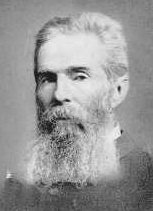
A colleague repeatedly insisted that every beard should have a name, and so I obliged him and half-jokingly declared that the beard’s name was Herman (my inspiration was the prodigious beard of Herman Melville). But the joke also underlined the sad truth of the matter, which was that my beard was becoming its own self—it was the popular one, while I was the quiet hanger-on, milling about in the background as everyone talked about it. At parties, people were excited to see the beard, and then as an afterthought greeted me. It wasn’t that I had grown a beard, but rather that the beard had seemingly grown me, like some gangly awkward tail it had to drag everywhere.
Had I become enslaved to my beard? Had it come to define me to such a point that I was nothing without it? This sounded like the premise of a ridiculous cheap horror film, or even worse, a wry existential French drama filled with ennui and loathing. But there was a ring of truth to it as well. If I were to shave off this beard, I would be perceived as somehow less of a man than I once was. To shave it would be akin to chopping off an arm (or some other appendage), and people would naturally shun me out of disgust for my self-mutilation. We were chained together, and there was no breaking the bond now, even if I wanted to.
People say never trust a man with a beard, but I say never trust a beard with a man. Who knows what nefarious plots are hatching somewhere at the base of those dark bristles? They resemble a forest at night, where vile schemes can be concocted under the cover of the canopy, where even the brightest moon cannot penetrate to the rotting leaves and dead skin far below. And more than any other reason, that is why I hold on to this beard, my Herman, despite all of these conflicted feelings I have towards it. For if it were not on my face, who knows what trouble it might get up to?
Flung suddenly into the adult world, I was ignorant of the ramifications of this facial hair. In my naïve state, I thought it would be a disguise, like putting on a wig and sunglasses. Surely no one would recognize me. “Who is that bearded guy who looks kind of like Joe?” they would ask, at which point I would laugh and say, “Aha! It is me!” And we would all share a laugh about my remarkable disguise and then carry on with our lives. It would be a good trick at parties, and that’s all.
With that expectation in mind, I grew it during a week off of work. Near the end of the week, I was rather disappointed when I ran into a coworker who recognized me immediately without even the slightest hint of uncertainty. Was it me or just a brilliant disguise? Nope, it was just me.
And at first, this was enough—it was just me with a bit of fuzz on the face. There was some consternation amongst relatives (my mother, too passive aggressive to openly voice her dislike of the beard, simply kept asking me why I had grown it, while my father cautioned me that I would find it hot during summer), but the response was generally supportive. The beard was the missing link in my appearance, and I felt at ease with beard related activities, such as thoughtfully tugging the hairs on my chin while reading Dostoyevsky.
But my new facial hair produced unexpected results. The beard opened the door on a whole realm of masculinity previously barred to me. Many of my male colleagues at work began to engage me in beard discussions—fond reminisces of beards long since shaven but dearly missed, rueful confessions of their own inability to grow respectable facial hair, comparisons of grooming methods. Most often, these conversations occurred in the men’s room. Where once were awkward pauses as we passed each other leaving the bathroom, now there were relaxed exchanges on beard related topics (most common remark: “I bet that thing keeps you warm in winter”).
I bore this all with smiling patience, even as it struck me odd that such conversations almost always had to occur in the bathroom. Apparently, it was only in this inner sanctum of virility that we could broach such masculine topics, freed at last from the endless distractions of the women folk, who presumably would interrupt such manly talk with pickle jars that needed opening or shelves that needed leveling or whatever it was that I was supposed to be doing now that I was a man.
The initial awkwardness of discussing shaving techniques with men thirty years my senior gave way to a deeper, more unsettling anxiety. If they were having this conversation with me solely for the sake of my beard, then what did this say about my own worth? Were they talking to me…or to the beard?
Never before had a feature of my personal appearance defined me. Prior to my bearding, no one discussed my glasses with me, nor my hair, my chin, my cheeks. Friends did not come up to me and ask to feel my face, but they were eager to stroke the new beard. Naturally, I felt a bit jealous. I now realized that before the beard I had been essentially faceless and formless in the eyes of others. If I were to rob a liquor store now, the description on the six o’clock news would make prominent mention of a bearded man. The police sketch would likely show me in a hoodie with the single defining feature of the drawing being the dark beard scribbled in charcoal. But if I had robbed a liquor store in my clean-shaven state, I would have been effectively anonymous. “I can’t explain it,” the confused clerk would have told reporters. “Some clothes floated into the store and emptied the till and then disappeared.”
A colleague repeatedly insisted that every beard should have a name, and so I obliged him and half-jokingly declared that the beard’s name was Herman (my inspiration was the prodigious beard of Herman Melville). But the joke also underlined the sad truth of the matter, which was that my beard was becoming its own self—it was the popular one, while I was the quiet hanger-on, milling about in the background as everyone talked about it. At parties, people were excited to see the beard, and then as an afterthought greeted me. It wasn’t that I had grown a beard, but rather that the beard had seemingly grown me, like some gangly awkward tail it had to drag everywhere.
Had I become enslaved to my beard? Had it come to define me to such a point that I was nothing without it? This sounded like the premise of a ridiculous cheap horror film, or even worse, a wry existential French drama filled with ennui and loathing. But there was a ring of truth to it as well. If I were to shave off this beard, I would be perceived as somehow less of a man than I once was. To shave it would be akin to chopping off an arm (or some other appendage), and people would naturally shun me out of disgust for my self-mutilation. We were chained together, and there was no breaking the bond now, even if I wanted to.
People say never trust a man with a beard, but I say never trust a beard with a man. Who knows what nefarious plots are hatching somewhere at the base of those dark bristles? They resemble a forest at night, where vile schemes can be concocted under the cover of the canopy, where even the brightest moon cannot penetrate to the rotting leaves and dead skin far below. And more than any other reason, that is why I hold on to this beard, my Herman, despite all of these conflicted feelings I have towards it. For if it were not on my face, who knows what trouble it might get up to?
Saturday, March 14, 2009
Waiting at the Greyhound station
In the past, Greyhound stations were a mess come boarding time. People clustered around the admitting entrances forming lines within lines, a maze of dazed and irritable travelers. Everyone would wait in the seats along the edge of the station until enough people had formed a line at the admitting booth—usually after five or six people had stood up and staked out their position with a phalanx of luggage, the rest of the passengers would flood in, leading to a crushed, deformed line.
Even worse, the lines for the other bus routes would start to blend with your own, making such a mess of things that you would wonder if you were actually boarding the right bus. The secret terror of this moment was not the chaos or the crowds, but the dreadful possibility that you might find yourself stuck somewhere in a town so little known that even the residents don’t know where it is (perhaps they too boarded the wrong bus).
Now, as a result of heightened security measures, we have to form lines. The station security officers scan us for metal and search our carry-on luggage for shampoo, and in order to do this, we must be neatly ordered in rows. The advantage of this new method—aside from staving off the boarding-time panic attacks that I had come to believe were just a natural part of the system—is that instead of nervously watching for people butting in line and making sure I’m not accidentally going to Manitoba, I can actually take in the varied and strange characters that so vitally enrich the Greyhound experience. The following is an example of one such notable person encountered during my last trip:
A man and his young son pull up to the back of a line running parallel to my own, just a couple of feet away from myself. The boy seems to be four or five, the man probably no older than his early 30s. Trying to kill some time and ease his son’s restlessness, the father asks the boy, “Want to dance?” The son nods and so the father pulls out his cell phone, which plays the unmistakable opening chords of AC/DC’s “Back in Black.” The boy stomps along to the music and we all laugh at this four-year-old thrashing along to the song. He begins stomping on father’s feet and the man chastises him, saying, “Hey, don’t dirty daddy’s shoes—I cleaned them for baba, okay?” After the song stops (only the opening portion plays), the man puts his phone away and sighs wistfully, “They just don’t make them like this anymore.”
Another man gets into line behind them and drops his three bags on the floor. He looks at the father’s luggage and realizes that he has forgotten his own tags. “Where do you get those?” he asks, and the father points to the ticket counter, where a long line of fidgeting passengers waits, immobile and anxious. The man picks up his luggage, sighs and trudges off to stand in another line. “I hear you,” the father says as the man walks away, not even listening. “Next time, I’ll pack everything into one bag, right, Jake?” His son looks blankly at him.
“Next time?” he corrects himself. “There won’t be a next time. Never again.” The man with the luggage is long since out of earshot, but the father continues speaking, either to no one or everyone. “Man, losing your license sucks. It’s almost as bad as getting your balls chopped off. No—worse.”
Another man chimes in with a supportive “yeah,” which encourages the father to continue. “One time, one time—and you lose your license. I had two beers, and then as we’re leaving my buddy leaves behind a full beer on the table. I’m like, ‘That’s four bucks! Are you crazy?’ So I down it, and of course there’s a check stop right outside. Two minutes after I leave, and I’m just over the limit. Just barely.”
He shakes his head ruefully as a new passenger comes to stand behind him in the line. This man wears a hoodie and has sideburns that end somewhere just below his jaw line. Distracted by this sight, the father looks over the man approvingly and declares, “Buddy, those are the best sideburns I’ve ever seen. How long did that take you?”
“Oh, I don’t know. They used to be bigger, but I shaved them for work,” the man says diffidently, a little embarrassed but still amiable.
“Ho-lee shit,” the father drawls in amazement. The man with the sideburns laughs at this, but noiselessly, repressing the sound so that it stays in his belly and causes his whole body to shake. The father glances down at his son, who is crouching, tired from standing so long in line. “Hey, Jake,” the father says sternly. “Stand up like a man.”
The boy solemnly pulls himself up to his full height. “That’s a good boy,” the father says, putting his hand on his son's head. “Daddy loves you. Be good.”
Even worse, the lines for the other bus routes would start to blend with your own, making such a mess of things that you would wonder if you were actually boarding the right bus. The secret terror of this moment was not the chaos or the crowds, but the dreadful possibility that you might find yourself stuck somewhere in a town so little known that even the residents don’t know where it is (perhaps they too boarded the wrong bus).
Now, as a result of heightened security measures, we have to form lines. The station security officers scan us for metal and search our carry-on luggage for shampoo, and in order to do this, we must be neatly ordered in rows. The advantage of this new method—aside from staving off the boarding-time panic attacks that I had come to believe were just a natural part of the system—is that instead of nervously watching for people butting in line and making sure I’m not accidentally going to Manitoba, I can actually take in the varied and strange characters that so vitally enrich the Greyhound experience. The following is an example of one such notable person encountered during my last trip:
A man and his young son pull up to the back of a line running parallel to my own, just a couple of feet away from myself. The boy seems to be four or five, the man probably no older than his early 30s. Trying to kill some time and ease his son’s restlessness, the father asks the boy, “Want to dance?” The son nods and so the father pulls out his cell phone, which plays the unmistakable opening chords of AC/DC’s “Back in Black.” The boy stomps along to the music and we all laugh at this four-year-old thrashing along to the song. He begins stomping on father’s feet and the man chastises him, saying, “Hey, don’t dirty daddy’s shoes—I cleaned them for baba, okay?” After the song stops (only the opening portion plays), the man puts his phone away and sighs wistfully, “They just don’t make them like this anymore.”
Another man gets into line behind them and drops his three bags on the floor. He looks at the father’s luggage and realizes that he has forgotten his own tags. “Where do you get those?” he asks, and the father points to the ticket counter, where a long line of fidgeting passengers waits, immobile and anxious. The man picks up his luggage, sighs and trudges off to stand in another line. “I hear you,” the father says as the man walks away, not even listening. “Next time, I’ll pack everything into one bag, right, Jake?” His son looks blankly at him.
“Next time?” he corrects himself. “There won’t be a next time. Never again.” The man with the luggage is long since out of earshot, but the father continues speaking, either to no one or everyone. “Man, losing your license sucks. It’s almost as bad as getting your balls chopped off. No—worse.”
Another man chimes in with a supportive “yeah,” which encourages the father to continue. “One time, one time—and you lose your license. I had two beers, and then as we’re leaving my buddy leaves behind a full beer on the table. I’m like, ‘That’s four bucks! Are you crazy?’ So I down it, and of course there’s a check stop right outside. Two minutes after I leave, and I’m just over the limit. Just barely.”
He shakes his head ruefully as a new passenger comes to stand behind him in the line. This man wears a hoodie and has sideburns that end somewhere just below his jaw line. Distracted by this sight, the father looks over the man approvingly and declares, “Buddy, those are the best sideburns I’ve ever seen. How long did that take you?”
“Oh, I don’t know. They used to be bigger, but I shaved them for work,” the man says diffidently, a little embarrassed but still amiable.
“Ho-lee shit,” the father drawls in amazement. The man with the sideburns laughs at this, but noiselessly, repressing the sound so that it stays in his belly and causes his whole body to shake. The father glances down at his son, who is crouching, tired from standing so long in line. “Hey, Jake,” the father says sternly. “Stand up like a man.”
The boy solemnly pulls himself up to his full height. “That’s a good boy,” the father says, putting his hand on his son's head. “Daddy loves you. Be good.”
Wednesday, February 4, 2009
Two-timer comes clean
Dear Blog,
I have a shameful confession to make. Inspired by Girl on the Corner's honesty, I feel that I too must come clean: I've been having a relationship with another blog for more than four months now. I had tried to find a way to break it to you gently, but I could never find the words. I'm sorry that it has come to this.
Now, I assure you, I have not abandoned you, dear blog, faithful blog. You were my first blog, and as we all know, you never truly get over your first blog. In fact, I hope you will be able to make peace with my other blog so that we can all co-exist in loving harmony, perhaps as some sort of kinky three-way marriage, if that's not asking too much (I won't press the matter just yet). If it's any comfort to you, I only share my cinematic musings with this other blog, but my secret desires, my most feverish dreams, my heart, my soul—that belongs to you.
Please know that I'm there for you.
Bloggingly yours,
Joe Wet Cow
I have a shameful confession to make. Inspired by Girl on the Corner's honesty, I feel that I too must come clean: I've been having a relationship with another blog for more than four months now. I had tried to find a way to break it to you gently, but I could never find the words. I'm sorry that it has come to this.
Now, I assure you, I have not abandoned you, dear blog, faithful blog. You were my first blog, and as we all know, you never truly get over your first blog. In fact, I hope you will be able to make peace with my other blog so that we can all co-exist in loving harmony, perhaps as some sort of kinky three-way marriage, if that's not asking too much (I won't press the matter just yet). If it's any comfort to you, I only share my cinematic musings with this other blog, but my secret desires, my most feverish dreams, my heart, my soul—that belongs to you.
Please know that I'm there for you.
Bloggingly yours,
Joe Wet Cow
Friday, December 12, 2008
Anonymous pamphlet found in bus shelter, part 5 of 5
Reader, this is it: the end.
I wish I could tell you all about the lives of Perlez and Dean after the “completion” of their mission, all of the side streets they walked down, all the houses they entered. I wish I could tell you who they loved and hated, because this might give us some hope of understanding what they did, and through that, the world they made, which is the world that made us. Some may contest that point, but I stand behind it. Even if only through inaction and failure, they are responsible.
Sadly, little is known about their lives after they left that apartment. The only real stipulation that the future placed on them was that they must report the details of their mission, which each man fulfilled dutifully. Sealed in the time capsule buried at the assigned location near Hof, the scientists of the future would pull out twin reports from Perlez and Dean. Each man had written his own separate account of the journey to Braunau and what transpired there, and from those reports, this record has been extrapolated. I do not know if either man read the report of the other, but I rather doubt it.
However, this is not all that was found in the capsule. Perlez did include an additional report that covered some additional ground, sketching in details of his post-Braunau life while directly addressing the future. It is a curious report, to put it mildly, and many dismiss it as the ravings of a disturbed mind. This is a gross oversight, I believe. Perlez has much to tell us, if we care to listen. Granted, the veracity of it all cannot be assured, but we really have no reason to believe anything these men wrote in their reports is true. Who is to say the mental state of Perlez was any more stable when he wrote the first report than when he wrote the second. Few like to admit this, but the two men could very easily be making excuses for their failures, rather than presenting an accurate and true representation of their mission.
We cannot turn to the records or the history books to confirm what happened to either man. Neither seems to have made a trace on the historical record. They are writing to us from oblivion, the white void between the lines where millions of peasants and proletarians have lived and died without even leaving a corpse in the bone yard that is the historical record. Perhaps we cannot trust Perlez and Dean, but have we even earned their trust? They may have no use for the future, but it is clear that the future has no use for them as well.
The second report was written in the same hand that wrote the first, and there is little change in the handwriting, though the quality of the pen seems to have improved measurably between the writing of the two. But the second report is clearly the messier of the two. The first is quite clean--no crossed out words, few spelling errors. I suspect it is a final draft of an early version. Undoubtedly, both men chose their words carefully when telling us what had happened.
Perlez’s second report is written more like a draft. Many words are crossed out, usually scribbled until all that remains is a dark cloud of black ink, hovering over some blithe word on the line below. Sometimes, extra words and half-sentences are written in the margins with arrows drawn to where they go on the line. It seems likely that Perlez wrote it, and then revised it, censoring himself in places, shifting the tone in others, correcting the most embarrassing spelling and grammatical errors without paying particular concern to the scattershot structure of the whole report. The messiness is often cited as evidence of Perlez’s disturbed state as he wrote this report, as if it were nothing more than feverish ranting. This, I believe, is pure nonsense. Would a lunatic bother to fix the spelling of “embarrassed” (missing an r, and then crossed out and spelled correctly)? Would a disturbed man change the following sentence, “He never understood the consequences of his inaction,” to “He never quite grasped the consequences of his inaction”? The first displays a certainty of tone undercut by the second, which suggests “he” at least tried to fathom the consequences, even if only to fail in the end. There is a softening of tone, a grammatical diplomacy, that suggests self-questioning on the part of Perlez--hardly characteristic of a disturbed mind, which does not gain perspective, as these revisions suggest, but rather loses it.
Still, it is hard not to question how the messy document got into the time capsule. It seems like a work in progress, but if Perlez were unable to finish it, then how did it wind up in the capsule? Presumably, he was the only one with knowledge of the capsule, outside of Dean (who was already dead when the second report was written). One can reasonably assume that someone else--perhaps entrusted by Perlez--placed the report in the capsule after Perlez was unable to finish his work, either through illness or death. The questions that such a scenario raises, however, are troubling and impossible to answer. How did this knowledge affect the person? Were they aware of what they were being asked to do? Did they act upon this knowledge in a way that somehow altered the future?
The other prospect--and I believe this one to be the most likely--is that Perlez simply grew tired of revising the second report and buried it, along with whatever lingering self-recriminations he may have had about the mission and his life. Dwelling on these matters can be difficult enough for objective observers, but to have been an active participant in this story and then find yourself going over and over the details to try and understand what went wrong is probably too much for any man to bear. I imagine he simply put down his pen and walked away from it, and the report supports such an interpretation.
Perlez covers much of his life story in the report, albeit only in a summary fashion. There seem to be large swaths of years that he is uncomfortable describing, and at several points, he alludes to substance abuse while not offering details. The years directly after leaving Braunau are particularly grim, and Perlez dispatches them with a simple phrase: “I wandered.”
But where? And what did he do? We must keep in mind that every step they took in the past was potentially destructive, always displacing something that would have been undisturbed otherwise. This was treated as one of the acceptable risks of the mission: so long as neither man procreated (and it was assured they could not) or killed, then the only significant change they could produce was the prevention of World War II.
But in those first few years, Perlez was certainly distraught enough to behave recklessly, if not monstrously. Poring over newspaper records of the late nineteenth and early twentieth century in Germany and Austria, scholars often point out traces of Perlez. “Ether addict attacks police officer, runs away unapprehended” is one headline that often appears when people make the argument that Perlez somehow wandered onto the stage of history, however briefly, during these years.
After almost a decade of wandering, he found himself at Hof, and he remembered the location of the time capsule. On an instinct, he went to the spot and searched. He found it, and inside was Dean’s report, sealed for posterity.
The existence of this report seemed to stabilize Perlez’s sense of duty, long adrift on a narcotic sea. Or perhaps it was simply the memory of his colleague, and the thought that he was still out there, existing somehow despite his dread of this time. Something seemed to shift in Perlez at this point, and while the man is quite unable to articulate the epiphany in the hobbled mixture of diary and scientific prose that makes up the second report, there is no doubt that the epiphany occurred.
The next few years were spent living around Hof, with the first year spent writing his mission report. Remarkably, given the distance of more than ten years from the actual events, Perlez is extremely articulate and precise in his recollection of events. It is possible that distance favoured reflection, or maybe the lost decade simply disappeared from his memory so that the events in Braunau were as vivid as last week. Or maybe, as the single defining purpose of his life, it is only reasonable that Perlez would not lose these events to the fog of memory. “I have spent the last decade trying to avoid these events,” he wrote, “but it seems I will always live each of these days over and over. It is not that I cannot forget; forgetting was easily bought. It is just that I cannot remember. When I think upon them, they seem to be happening now. I remember the present. I live the past.” These words are taken from the first report, which, curiously enough, is regarded as the more mentally balanced of the two reports written by Perlez.
The rest of the years in Hof were spent doing carpentry, the profession he had picked up a decade before and then abandoned. He described these years as peaceful, if lonely.
When the First World War could be seen skulking on the horizon, Perlez made the wise decision of absconding to Switzerland before anyone knew what was happening. For a man in his position, there seemed little other choice. If he stayed in Germany, he could have easily found himself conscripted into fighting. Even if he avoided the frontlines and found a quiet spot in the countryside to hide out the war, there was always the danger of the battlefield finding him at some point and forcing upon him the choice that was not a choice: defend himself or die.
The years in exile were hardly happy for Perlez. He immediately missed the stability of his home near Hof, the tranquil life he had earned through years of disquiet. Switzerland was filled with exiles during those years, but even amongst the displaced and dispossessed, Perlez did not find equals. There is a vast difference between being exiled from a place and being exiled from a time. There was only one man who was Perlez’s equal, his twin, and he had abandoned that man long ago. “If Dean were here,” Perlez wrote of the rooming house he stayed at for several years, “he would have hated this room, with its abominable clutter and oppressive sense of decoration. It reminds me of the future.”
When the war was over, Perlez returned to Hof once more, a place as battered as any other in Germany. He recognized some faces in the town, but everyone seemed to have aged ten years, not just four, even as he felt to have not aged at all. It was like time travel once again. Or was this how everyone experienced time in this era, not as a tangible, quantifiable object that was bought and sold, bottled and stored, but rather as a state akin to waking from a dream? That time was the epiphany in which you stopped living but for a moment in order to tabulate all that you had lost and gained?
If so, Perlez could not yet bring himself to make these calculations. He became the town drunkard, a sop to the inferiority of others. Sure, we are all wretches, the townspeople could say, but at least we are not that wretched. And then they could point at this staggering fool of a man, who fell down in the street, too drunk to walk, and say, that is the worst of us, secure in the knowledge that as long as he existed, no one could point at them and utter those words. And as they sneered fondly at him, Perlez all the while contained all the thoughts of their destruction and salvation behind a wall of alcohol. If they knew what he knew, would they only hate him more?
When Dean returned, Perlez at first thought it was a hallucination, just another guilty thought to torment him. But it was the real thing, returned to Hof for reasons quite unclear at first. He had bought a cottage on the outskirts of town after having worked in Spain for many years. In his diligence and thrift, he had saved up enough money to retire and quietly watch the tragedy of the century play out.
But why Hof? Dean would not respond clearly to these questions, although perhaps he did not have a clear answer himself. It seemed like the only natural place to end his days.
All of this autumnal talk confused Perlez at first. But it was only as he looked at Dean with a sober mind that he realized how much the man had aged, and therefore, he himself had aged. “I started crying the first time I realized it was 1926,” Perlez writes at one point in the second report. The phrase begs the question: was there a second time he realized it was 1926? A third? How many times did he need to realize this before it finally stuck?
That year was a particularly hard one for Perlez, as he began drying out. He stayed at Dean’s cottage, his body ravaged by shakes and hallucinations. The wind outside the house made a hideous music at night, like pigs squealing in a barn. Whenever the wind died for a second, it was as if a pig’s throat had been slit. But others always rose up to take its place. He would tell Dean to turn off the record and the man never had a response that could still the terror Perlez felt at this noise. They both suffered through the nights.
However, Perlez did make it past these difficult first steps and achieved something resembling balance once more. He seemed more humble, frailer, but he felt that perhaps this fragility was his true state, and if he embraced it, he would live longer than if he hid it. Like so many other things in his life, this was mere theory, and the execution would prove difficult, if not impossible.
After recovering sufficiently, he left the cottage, unwilling to burden Dean anymore. The man protested perfunctorily, but with little passion. Perlez sensed that his colleague had helped out of a basic sense of duty, and that to stay any longer would be a gross exploitation of the man’s decency. Once Perlez had sobered up, he could not shake the feeling that whatever bond had existed between them decades ago was gone. What existed now was simply the obligation towards that bond, and not the thing itself. But more significantly, both men knew that there was no one else on the planet with whom they could relax the tension in their shoulders, that aching in their spine, for just one moment.
Perlez went back to work, doing labour on an assembly line at a car factory in town. The people around him were half his age, and they rarely interacted with him. They went out drinking on weekends, married their pregnant girlfriends, complained about inflation. They lived their lives and he his own, and if the two were to ever intersect, both would be set on fire by the collision.
He rarely saw Dean during the late twenties, save for a shared meal a couple of times a year. Neither really had much to say, and at this point, all they could do was enjoy the relief of silence in each other’s company. They both were well aware of the world around them and what was happening in Berlin, but neither ever brought it up when they were together.
By 1929, Perlez had retired from the factory, eking out a meagre pension in his senior years. He lived in a run-down apartment filled with other impoverished elders and poor students and addicts. For all of the grinding demoralization of this poverty, he at least never lacked entertainment. There was always something happening on the street whenever he looked out the window, always a soap opera playing whenever he put his ear to the wall.
It was late in 1929 when Perlez realized that Dean was ill. With months passing between visits, it was increasingly evident that the health of Dean was fading. Had Perlez seen his colleague every day, the deterioration might have been imperceptible, but every time he saw Dean, the man seemed to lose weight and appear more pale. But still, he said nothing, merely noting how Dean barely ate, just pushed food around the plate and took a few bites.
The next time he visited Dean early in 1930, Perlez was shocked by how enfeebled his colleague had become. When he knocked at the door, he waited for what seemed like an eternity, only to find Dean slow and bent, barely lifting his feet as he walked. But there was still food on the table, a small, meagre meal, yet still hot and steaming.
“You’re ill,” Perlez accused.
“Yes,” Dean replied and sat down at the table.
“What’s wrong?” Perlez did not sit.
Dean shrugged.
“Can you even eat anymore?”
At first, Dean hesitated, perhaps hoping to somehow bluff his way through this, but he seemed to relinquish that illusion, finally speaking, “No, not really.” He added, “Mostly liquids, I can manage. But I don’t really bother with solids anymore.”
“You’re wasting away.”
Dean smiled. “We all go some way.”
Perlez’s expression was horrified. “But haven’t you tried to eat, are you just giving up?”
The muscles in Dean’s face shifted, and Perlez was struck by how long it took his colleague to change expressions, as if even that was now a huge burden on his weakened constitution. After a while, Dean’s face reconstituted itself into a picture of irritation. “Of course I’ve tried,” he said. “I just can’t anymore.”
“Cancer,” Perlez said, mostly to himself, “it must be cancer.”
“I don’t care what it is.”
“It’s cancer.”
“I don’t care.”
Silence fell between the two men. The food was cooling in its bowl--a thin broth, it appeared to Perlez.
“You should leave,” Dean declared.
Perlez looked at his colleague, amazed. His voice started to crack as he spoke. “I can’t leave you in this state. It isn’t right.”
“Why not? I’ve made all my preparations. Everything taken care of. All that I have left to do is pass the time.”
“Everything?” Perlez felt himself helpless for a moment, lost in the fact that this had been occurring all along while he had been ignorant of what was happening.
Dean looked down at his bowl, which was clean and empty. “There is one thing, I was hoping....”
His voice trailed off for a moment. The thought seemed to strain him. “Can you ask them to erase our names?”
“What? Who?”
“Whoever writes these things, whoever keeps the records,” Dean said dismissively. “I don’t know. I just want my name to be wiped out from the record.”
“They can’t just make us not exist.”
Dean sighed. “I know. I know they can’t pretend we never left. I know we can’t ask the whole world to forget that, but still....” Dean’s voice was quiet. “I just want to be forgotten. They can talk about two men that went back. They can talk about what we did. I just want my name erased. I want them to forget I ever existed.”
Perlez stared down at his colleague, who would not meet his eyes. Dean just gazed into the empty bowl, and Perlez wondered if the man could still eat, and had simply grown weary of it, had simply decided to cease existing. But that didn’t make sense. And the request, cruel as it was, did make sense.
“I will,” Perlez said. “I’ll write it down and put it in the capsule.”
Dean looked up and his face slowly contorted into a smile, lips held tightly shut, eyes cloudy but not raining. “Thank you.”
“Let them forget,” Perlez said with an air of bravura that sounded false to him, even though Dean seemed to appreciate it.
The two men shook hands and Perlez left, not quite understanding what was happening. It seemed to him that Dean was choosing death and oblivion, not simply succumbing to them, but actively choosing these things that you spend your lifetime running away from, only to come full circle in the end and fall down exhausted in their arms anyway. If this was not suicide, then what was it?
But the more he thought about it, the more he felt unable to deny the request. Ultimately, he was powerless over what the future did with them, but he had to make the request. In fact, he could feel the same temptation that Dean must surely be feeling--to become a person outside of history, with no past and no future, just a moment that exists and is perceived and experienced and then gone.
And so the second report contains Perlez’s request on the behalf of Dean, that the future erase all record of their births, their deaths, their names, their entire lives. Dean’s parents might have had three children once, a boy and two girls. Now, whoever they are, they have two children. Sometimes, if someone asks Dean’s mother if she wishes she had a son, her eyes grow wet and she doesn’t know what to say, and the person asking the question changes the subject awkwardly, not really understanding what he said or did to provoke such a response.
Of course, the memories of those who knew Dean and Perlez cannot be erased. But all written record of their lives has been destroyed. The collective memory of both men has been destroyed, leaving only private memories, which shall die soon enough. The names, reader, are my own creation, for the simplicity of telling the tale, and that is all. Whatever the real names might be, it seems that they have been successfully erased. I could find no record of them, and I did search quite hard.
All we have left of Perlez and Dean are their reports, which form an incomplete history of their lives. But they can no longer be connected with their own lives. Whoever they are, they have been set free from their own story. Sadly, their actions (and the consequences of these actions) cannot be erased, but they have been granted immunity. Perhaps Dean decided they had suffered enough for their failure. I see no reason to argue the point.
The reader may rightly wonder what happened to the two men? Obviously, the story is incomplete and must remain that way. We do know that Dean died at some point in 1930, not long after the aforementioned encounter between him and Perlez. Apparently, Perlez did not see him again after he left the cottage.
The second report seems to have been written shortly after Dean’s death. The cottage and all of Dean’s worldly wealth was left to Perlez, who writes that he moved in with some hesitation, not wanting to take the place of a dead man. A natural response, but the pragmatic concerns of his own poverty overrode such petty superstitions.
There is little in the final pages of the second report that elaborate on Perlez’s mental state in the aftermath of Dean’s death. Was he gripped by despair at being finally and completely alone in his time? Or did he feel a sense of relief at the prospect of being unknown, a stranger who no one would ever know the truth about? Surely, there is a sense of freedom, even as there is sadness, in Perlez’s position at this point.
Nor do we know how long he lived. Did he see the rise of Hitler? The beginning of the Second World War? The concentration camps? Did he smile and nod knowingly throughout all the conversations, biting his tongue? It is hard to imagine how he or anyone could tolerate such a life. To live powerless before that terror is horrible, but how awful to experience it as Perlez surely must have--as the direct consequence of your life.
The second report ends with regret; Perlez was undoubtedly aware of the deprivations that would come to him if he lived long enough. He writes, “I often speculate why someone did not go to the spot where capsule was supposed to be buried once the mission had been approved to go ahead. Surely there must have been a curious soul eager to see the results of the mission before it began? Children still find their Christmas presents before Christmas morning. Curiosity is not dead.
“Maybe we were simply blind. Or maybe we knew what we would find and so we simply ignored it, just for the sake of allowing ourselves the opportunity to knowingly fly headlong into failure and then act surprised afterwards, as if we never expected that wall to be there. We knew it all along. Someone out there must be reading these words now, seeing my face on the news as I talk blithely about our good intentions and the braveness of this experiment. Whoever you are, why didn’t you try to stop me? What froze you in your place? That is the question I ask myself. That is the question that destroys me.
“Is it too much to wish that someone had grabbed me by the collar and shouted in my face, don’t go, don’t go, don’t go?”
Reader, I hope you will take these words to heart.
I realize you cannot take this story at face value. How could anyone? Obviously, the story cannot be entirely accurate, given the complications of its subject matter and the large gaps in the source material. I have done my best, but I regret there have been omissions. In many cases, my own speculations had to fill the gap, although I feel my imagination stayed truer to events than mere reality ever could.
When I began, I said this was not a warning, and I stand by those words. This was not intended to simply cause alarm. All I wanted to do was spread this knowledge and hope that it might somehow pass around until finally finding a brain in which it could take root. I do agree with Perlez--there must have been someone who read the contents of the capsule before he and Dean left for the past, and that person must have chosen to remain silent. I hope this knowledge passes through the years and reaches a mouth that can speak at the right time.
Of course, I doubt that is the case. If someone did stop the mission, then these words would not exist; in writing them, I only confirm that I am failure too. And yet I write, just as Perlez pleaded for someone to tell him to stay behind. And like Perlez and Dean, I stand now outside of time, outside of history. I, like them, have walked off the page, if only to better see the book itself.
I think I understand why the person who read the capsule did not act. How could they possibly act in such a situation? Having read the contents of the capsule, they knew that the mission did go forward, and they did nothing to prevent it. What an awful form of self-knowledge, to understand that you fail your life by living it.
But how can you live your life like that, frozen by a knowledge that you cannot change the future or the past? Perlez and Dean had to go back into the past. I had to write these words. You had to read them. But I hope, dear reader, you shall do me the courtesy of acting surprised. In this mess of time we have created, that may be the only human decency left between us.
I wish I could tell you all about the lives of Perlez and Dean after the “completion” of their mission, all of the side streets they walked down, all the houses they entered. I wish I could tell you who they loved and hated, because this might give us some hope of understanding what they did, and through that, the world they made, which is the world that made us. Some may contest that point, but I stand behind it. Even if only through inaction and failure, they are responsible.
Sadly, little is known about their lives after they left that apartment. The only real stipulation that the future placed on them was that they must report the details of their mission, which each man fulfilled dutifully. Sealed in the time capsule buried at the assigned location near Hof, the scientists of the future would pull out twin reports from Perlez and Dean. Each man had written his own separate account of the journey to Braunau and what transpired there, and from those reports, this record has been extrapolated. I do not know if either man read the report of the other, but I rather doubt it.
However, this is not all that was found in the capsule. Perlez did include an additional report that covered some additional ground, sketching in details of his post-Braunau life while directly addressing the future. It is a curious report, to put it mildly, and many dismiss it as the ravings of a disturbed mind. This is a gross oversight, I believe. Perlez has much to tell us, if we care to listen. Granted, the veracity of it all cannot be assured, but we really have no reason to believe anything these men wrote in their reports is true. Who is to say the mental state of Perlez was any more stable when he wrote the first report than when he wrote the second. Few like to admit this, but the two men could very easily be making excuses for their failures, rather than presenting an accurate and true representation of their mission.
We cannot turn to the records or the history books to confirm what happened to either man. Neither seems to have made a trace on the historical record. They are writing to us from oblivion, the white void between the lines where millions of peasants and proletarians have lived and died without even leaving a corpse in the bone yard that is the historical record. Perhaps we cannot trust Perlez and Dean, but have we even earned their trust? They may have no use for the future, but it is clear that the future has no use for them as well.
The second report was written in the same hand that wrote the first, and there is little change in the handwriting, though the quality of the pen seems to have improved measurably between the writing of the two. But the second report is clearly the messier of the two. The first is quite clean--no crossed out words, few spelling errors. I suspect it is a final draft of an early version. Undoubtedly, both men chose their words carefully when telling us what had happened.
Perlez’s second report is written more like a draft. Many words are crossed out, usually scribbled until all that remains is a dark cloud of black ink, hovering over some blithe word on the line below. Sometimes, extra words and half-sentences are written in the margins with arrows drawn to where they go on the line. It seems likely that Perlez wrote it, and then revised it, censoring himself in places, shifting the tone in others, correcting the most embarrassing spelling and grammatical errors without paying particular concern to the scattershot structure of the whole report. The messiness is often cited as evidence of Perlez’s disturbed state as he wrote this report, as if it were nothing more than feverish ranting. This, I believe, is pure nonsense. Would a lunatic bother to fix the spelling of “embarrassed” (missing an r, and then crossed out and spelled correctly)? Would a disturbed man change the following sentence, “He never understood the consequences of his inaction,” to “He never quite grasped the consequences of his inaction”? The first displays a certainty of tone undercut by the second, which suggests “he” at least tried to fathom the consequences, even if only to fail in the end. There is a softening of tone, a grammatical diplomacy, that suggests self-questioning on the part of Perlez--hardly characteristic of a disturbed mind, which does not gain perspective, as these revisions suggest, but rather loses it.
Still, it is hard not to question how the messy document got into the time capsule. It seems like a work in progress, but if Perlez were unable to finish it, then how did it wind up in the capsule? Presumably, he was the only one with knowledge of the capsule, outside of Dean (who was already dead when the second report was written). One can reasonably assume that someone else--perhaps entrusted by Perlez--placed the report in the capsule after Perlez was unable to finish his work, either through illness or death. The questions that such a scenario raises, however, are troubling and impossible to answer. How did this knowledge affect the person? Were they aware of what they were being asked to do? Did they act upon this knowledge in a way that somehow altered the future?
The other prospect--and I believe this one to be the most likely--is that Perlez simply grew tired of revising the second report and buried it, along with whatever lingering self-recriminations he may have had about the mission and his life. Dwelling on these matters can be difficult enough for objective observers, but to have been an active participant in this story and then find yourself going over and over the details to try and understand what went wrong is probably too much for any man to bear. I imagine he simply put down his pen and walked away from it, and the report supports such an interpretation.
Perlez covers much of his life story in the report, albeit only in a summary fashion. There seem to be large swaths of years that he is uncomfortable describing, and at several points, he alludes to substance abuse while not offering details. The years directly after leaving Braunau are particularly grim, and Perlez dispatches them with a simple phrase: “I wandered.”
But where? And what did he do? We must keep in mind that every step they took in the past was potentially destructive, always displacing something that would have been undisturbed otherwise. This was treated as one of the acceptable risks of the mission: so long as neither man procreated (and it was assured they could not) or killed, then the only significant change they could produce was the prevention of World War II.
But in those first few years, Perlez was certainly distraught enough to behave recklessly, if not monstrously. Poring over newspaper records of the late nineteenth and early twentieth century in Germany and Austria, scholars often point out traces of Perlez. “Ether addict attacks police officer, runs away unapprehended” is one headline that often appears when people make the argument that Perlez somehow wandered onto the stage of history, however briefly, during these years.
After almost a decade of wandering, he found himself at Hof, and he remembered the location of the time capsule. On an instinct, he went to the spot and searched. He found it, and inside was Dean’s report, sealed for posterity.
The existence of this report seemed to stabilize Perlez’s sense of duty, long adrift on a narcotic sea. Or perhaps it was simply the memory of his colleague, and the thought that he was still out there, existing somehow despite his dread of this time. Something seemed to shift in Perlez at this point, and while the man is quite unable to articulate the epiphany in the hobbled mixture of diary and scientific prose that makes up the second report, there is no doubt that the epiphany occurred.
The next few years were spent living around Hof, with the first year spent writing his mission report. Remarkably, given the distance of more than ten years from the actual events, Perlez is extremely articulate and precise in his recollection of events. It is possible that distance favoured reflection, or maybe the lost decade simply disappeared from his memory so that the events in Braunau were as vivid as last week. Or maybe, as the single defining purpose of his life, it is only reasonable that Perlez would not lose these events to the fog of memory. “I have spent the last decade trying to avoid these events,” he wrote, “but it seems I will always live each of these days over and over. It is not that I cannot forget; forgetting was easily bought. It is just that I cannot remember. When I think upon them, they seem to be happening now. I remember the present. I live the past.” These words are taken from the first report, which, curiously enough, is regarded as the more mentally balanced of the two reports written by Perlez.
The rest of the years in Hof were spent doing carpentry, the profession he had picked up a decade before and then abandoned. He described these years as peaceful, if lonely.
When the First World War could be seen skulking on the horizon, Perlez made the wise decision of absconding to Switzerland before anyone knew what was happening. For a man in his position, there seemed little other choice. If he stayed in Germany, he could have easily found himself conscripted into fighting. Even if he avoided the frontlines and found a quiet spot in the countryside to hide out the war, there was always the danger of the battlefield finding him at some point and forcing upon him the choice that was not a choice: defend himself or die.
The years in exile were hardly happy for Perlez. He immediately missed the stability of his home near Hof, the tranquil life he had earned through years of disquiet. Switzerland was filled with exiles during those years, but even amongst the displaced and dispossessed, Perlez did not find equals. There is a vast difference between being exiled from a place and being exiled from a time. There was only one man who was Perlez’s equal, his twin, and he had abandoned that man long ago. “If Dean were here,” Perlez wrote of the rooming house he stayed at for several years, “he would have hated this room, with its abominable clutter and oppressive sense of decoration. It reminds me of the future.”
When the war was over, Perlez returned to Hof once more, a place as battered as any other in Germany. He recognized some faces in the town, but everyone seemed to have aged ten years, not just four, even as he felt to have not aged at all. It was like time travel once again. Or was this how everyone experienced time in this era, not as a tangible, quantifiable object that was bought and sold, bottled and stored, but rather as a state akin to waking from a dream? That time was the epiphany in which you stopped living but for a moment in order to tabulate all that you had lost and gained?
If so, Perlez could not yet bring himself to make these calculations. He became the town drunkard, a sop to the inferiority of others. Sure, we are all wretches, the townspeople could say, but at least we are not that wretched. And then they could point at this staggering fool of a man, who fell down in the street, too drunk to walk, and say, that is the worst of us, secure in the knowledge that as long as he existed, no one could point at them and utter those words. And as they sneered fondly at him, Perlez all the while contained all the thoughts of their destruction and salvation behind a wall of alcohol. If they knew what he knew, would they only hate him more?
When Dean returned, Perlez at first thought it was a hallucination, just another guilty thought to torment him. But it was the real thing, returned to Hof for reasons quite unclear at first. He had bought a cottage on the outskirts of town after having worked in Spain for many years. In his diligence and thrift, he had saved up enough money to retire and quietly watch the tragedy of the century play out.
But why Hof? Dean would not respond clearly to these questions, although perhaps he did not have a clear answer himself. It seemed like the only natural place to end his days.
All of this autumnal talk confused Perlez at first. But it was only as he looked at Dean with a sober mind that he realized how much the man had aged, and therefore, he himself had aged. “I started crying the first time I realized it was 1926,” Perlez writes at one point in the second report. The phrase begs the question: was there a second time he realized it was 1926? A third? How many times did he need to realize this before it finally stuck?
That year was a particularly hard one for Perlez, as he began drying out. He stayed at Dean’s cottage, his body ravaged by shakes and hallucinations. The wind outside the house made a hideous music at night, like pigs squealing in a barn. Whenever the wind died for a second, it was as if a pig’s throat had been slit. But others always rose up to take its place. He would tell Dean to turn off the record and the man never had a response that could still the terror Perlez felt at this noise. They both suffered through the nights.
However, Perlez did make it past these difficult first steps and achieved something resembling balance once more. He seemed more humble, frailer, but he felt that perhaps this fragility was his true state, and if he embraced it, he would live longer than if he hid it. Like so many other things in his life, this was mere theory, and the execution would prove difficult, if not impossible.
After recovering sufficiently, he left the cottage, unwilling to burden Dean anymore. The man protested perfunctorily, but with little passion. Perlez sensed that his colleague had helped out of a basic sense of duty, and that to stay any longer would be a gross exploitation of the man’s decency. Once Perlez had sobered up, he could not shake the feeling that whatever bond had existed between them decades ago was gone. What existed now was simply the obligation towards that bond, and not the thing itself. But more significantly, both men knew that there was no one else on the planet with whom they could relax the tension in their shoulders, that aching in their spine, for just one moment.
Perlez went back to work, doing labour on an assembly line at a car factory in town. The people around him were half his age, and they rarely interacted with him. They went out drinking on weekends, married their pregnant girlfriends, complained about inflation. They lived their lives and he his own, and if the two were to ever intersect, both would be set on fire by the collision.
He rarely saw Dean during the late twenties, save for a shared meal a couple of times a year. Neither really had much to say, and at this point, all they could do was enjoy the relief of silence in each other’s company. They both were well aware of the world around them and what was happening in Berlin, but neither ever brought it up when they were together.
By 1929, Perlez had retired from the factory, eking out a meagre pension in his senior years. He lived in a run-down apartment filled with other impoverished elders and poor students and addicts. For all of the grinding demoralization of this poverty, he at least never lacked entertainment. There was always something happening on the street whenever he looked out the window, always a soap opera playing whenever he put his ear to the wall.
It was late in 1929 when Perlez realized that Dean was ill. With months passing between visits, it was increasingly evident that the health of Dean was fading. Had Perlez seen his colleague every day, the deterioration might have been imperceptible, but every time he saw Dean, the man seemed to lose weight and appear more pale. But still, he said nothing, merely noting how Dean barely ate, just pushed food around the plate and took a few bites.
The next time he visited Dean early in 1930, Perlez was shocked by how enfeebled his colleague had become. When he knocked at the door, he waited for what seemed like an eternity, only to find Dean slow and bent, barely lifting his feet as he walked. But there was still food on the table, a small, meagre meal, yet still hot and steaming.
“You’re ill,” Perlez accused.
“Yes,” Dean replied and sat down at the table.
“What’s wrong?” Perlez did not sit.
Dean shrugged.
“Can you even eat anymore?”
At first, Dean hesitated, perhaps hoping to somehow bluff his way through this, but he seemed to relinquish that illusion, finally speaking, “No, not really.” He added, “Mostly liquids, I can manage. But I don’t really bother with solids anymore.”
“You’re wasting away.”
Dean smiled. “We all go some way.”
Perlez’s expression was horrified. “But haven’t you tried to eat, are you just giving up?”
The muscles in Dean’s face shifted, and Perlez was struck by how long it took his colleague to change expressions, as if even that was now a huge burden on his weakened constitution. After a while, Dean’s face reconstituted itself into a picture of irritation. “Of course I’ve tried,” he said. “I just can’t anymore.”
“Cancer,” Perlez said, mostly to himself, “it must be cancer.”
“I don’t care what it is.”
“It’s cancer.”
“I don’t care.”
Silence fell between the two men. The food was cooling in its bowl--a thin broth, it appeared to Perlez.
“You should leave,” Dean declared.
Perlez looked at his colleague, amazed. His voice started to crack as he spoke. “I can’t leave you in this state. It isn’t right.”
“Why not? I’ve made all my preparations. Everything taken care of. All that I have left to do is pass the time.”
“Everything?” Perlez felt himself helpless for a moment, lost in the fact that this had been occurring all along while he had been ignorant of what was happening.
Dean looked down at his bowl, which was clean and empty. “There is one thing, I was hoping....”
His voice trailed off for a moment. The thought seemed to strain him. “Can you ask them to erase our names?”
“What? Who?”
“Whoever writes these things, whoever keeps the records,” Dean said dismissively. “I don’t know. I just want my name to be wiped out from the record.”
“They can’t just make us not exist.”
Dean sighed. “I know. I know they can’t pretend we never left. I know we can’t ask the whole world to forget that, but still....” Dean’s voice was quiet. “I just want to be forgotten. They can talk about two men that went back. They can talk about what we did. I just want my name erased. I want them to forget I ever existed.”
Perlez stared down at his colleague, who would not meet his eyes. Dean just gazed into the empty bowl, and Perlez wondered if the man could still eat, and had simply grown weary of it, had simply decided to cease existing. But that didn’t make sense. And the request, cruel as it was, did make sense.
“I will,” Perlez said. “I’ll write it down and put it in the capsule.”
Dean looked up and his face slowly contorted into a smile, lips held tightly shut, eyes cloudy but not raining. “Thank you.”
“Let them forget,” Perlez said with an air of bravura that sounded false to him, even though Dean seemed to appreciate it.
The two men shook hands and Perlez left, not quite understanding what was happening. It seemed to him that Dean was choosing death and oblivion, not simply succumbing to them, but actively choosing these things that you spend your lifetime running away from, only to come full circle in the end and fall down exhausted in their arms anyway. If this was not suicide, then what was it?
But the more he thought about it, the more he felt unable to deny the request. Ultimately, he was powerless over what the future did with them, but he had to make the request. In fact, he could feel the same temptation that Dean must surely be feeling--to become a person outside of history, with no past and no future, just a moment that exists and is perceived and experienced and then gone.
And so the second report contains Perlez’s request on the behalf of Dean, that the future erase all record of their births, their deaths, their names, their entire lives. Dean’s parents might have had three children once, a boy and two girls. Now, whoever they are, they have two children. Sometimes, if someone asks Dean’s mother if she wishes she had a son, her eyes grow wet and she doesn’t know what to say, and the person asking the question changes the subject awkwardly, not really understanding what he said or did to provoke such a response.
Of course, the memories of those who knew Dean and Perlez cannot be erased. But all written record of their lives has been destroyed. The collective memory of both men has been destroyed, leaving only private memories, which shall die soon enough. The names, reader, are my own creation, for the simplicity of telling the tale, and that is all. Whatever the real names might be, it seems that they have been successfully erased. I could find no record of them, and I did search quite hard.
All we have left of Perlez and Dean are their reports, which form an incomplete history of their lives. But they can no longer be connected with their own lives. Whoever they are, they have been set free from their own story. Sadly, their actions (and the consequences of these actions) cannot be erased, but they have been granted immunity. Perhaps Dean decided they had suffered enough for their failure. I see no reason to argue the point.
The reader may rightly wonder what happened to the two men? Obviously, the story is incomplete and must remain that way. We do know that Dean died at some point in 1930, not long after the aforementioned encounter between him and Perlez. Apparently, Perlez did not see him again after he left the cottage.
The second report seems to have been written shortly after Dean’s death. The cottage and all of Dean’s worldly wealth was left to Perlez, who writes that he moved in with some hesitation, not wanting to take the place of a dead man. A natural response, but the pragmatic concerns of his own poverty overrode such petty superstitions.
There is little in the final pages of the second report that elaborate on Perlez’s mental state in the aftermath of Dean’s death. Was he gripped by despair at being finally and completely alone in his time? Or did he feel a sense of relief at the prospect of being unknown, a stranger who no one would ever know the truth about? Surely, there is a sense of freedom, even as there is sadness, in Perlez’s position at this point.
Nor do we know how long he lived. Did he see the rise of Hitler? The beginning of the Second World War? The concentration camps? Did he smile and nod knowingly throughout all the conversations, biting his tongue? It is hard to imagine how he or anyone could tolerate such a life. To live powerless before that terror is horrible, but how awful to experience it as Perlez surely must have--as the direct consequence of your life.
The second report ends with regret; Perlez was undoubtedly aware of the deprivations that would come to him if he lived long enough. He writes, “I often speculate why someone did not go to the spot where capsule was supposed to be buried once the mission had been approved to go ahead. Surely there must have been a curious soul eager to see the results of the mission before it began? Children still find their Christmas presents before Christmas morning. Curiosity is not dead.
“Maybe we were simply blind. Or maybe we knew what we would find and so we simply ignored it, just for the sake of allowing ourselves the opportunity to knowingly fly headlong into failure and then act surprised afterwards, as if we never expected that wall to be there. We knew it all along. Someone out there must be reading these words now, seeing my face on the news as I talk blithely about our good intentions and the braveness of this experiment. Whoever you are, why didn’t you try to stop me? What froze you in your place? That is the question I ask myself. That is the question that destroys me.
“Is it too much to wish that someone had grabbed me by the collar and shouted in my face, don’t go, don’t go, don’t go?”
Reader, I hope you will take these words to heart.
I realize you cannot take this story at face value. How could anyone? Obviously, the story cannot be entirely accurate, given the complications of its subject matter and the large gaps in the source material. I have done my best, but I regret there have been omissions. In many cases, my own speculations had to fill the gap, although I feel my imagination stayed truer to events than mere reality ever could.
When I began, I said this was not a warning, and I stand by those words. This was not intended to simply cause alarm. All I wanted to do was spread this knowledge and hope that it might somehow pass around until finally finding a brain in which it could take root. I do agree with Perlez--there must have been someone who read the contents of the capsule before he and Dean left for the past, and that person must have chosen to remain silent. I hope this knowledge passes through the years and reaches a mouth that can speak at the right time.
Of course, I doubt that is the case. If someone did stop the mission, then these words would not exist; in writing them, I only confirm that I am failure too. And yet I write, just as Perlez pleaded for someone to tell him to stay behind. And like Perlez and Dean, I stand now outside of time, outside of history. I, like them, have walked off the page, if only to better see the book itself.
I think I understand why the person who read the capsule did not act. How could they possibly act in such a situation? Having read the contents of the capsule, they knew that the mission did go forward, and they did nothing to prevent it. What an awful form of self-knowledge, to understand that you fail your life by living it.
But how can you live your life like that, frozen by a knowledge that you cannot change the future or the past? Perlez and Dean had to go back into the past. I had to write these words. You had to read them. But I hope, dear reader, you shall do me the courtesy of acting surprised. In this mess of time we have created, that may be the only human decency left between us.
Friday, December 5, 2008
Anonymous pamphlet found in bus shelter, part 4 of 5
The next morning, Dean awoke first and brought up two bowls of porridge from the elderly couple, who often made a large pot of the stuff for their tenants each morning. They were very laid back as landlords, preferring to let the tenants live their lives as they saw fit, but the couple still felt enough of a paternal instinct to make sure everyone went out into the day well fed.
Dean placed the bowls on the table, one in front of his chair and the other in front of Perlez’s. He walked over to his colleague’s bedroom door and then walked away, sitting down at the table and beginning to eat his breakfast.
As he was finishing, Perlez opened his door. He seemed less dishevelled than he had been last night, although his face was still quite obviously bruised in places. Without saying anything, he sat and began to eat. Dean noted the slowness in his walk, the way he seemed to be favouring his left leg. While Perlez’s head was down over the bowl, Dean stared at the marks on his colleague’s face, trying to fathom the meaning of a bruise, the significance of a cut. And whenever Perlez looked up, Dean looked away.
Perlez was the first to speak. “I’ve decided on what we should do.”
He continued eating, as if that were all Dean needed to know. Finally, Dean spoke up. “Yes, and--?”
“Oh,” Perlez said, “you want to know?”
“Yes,” Dean replied, ignoring the insult.
Perlez dropped his spoon into the empty bowl. It rattled like dropping a bolt into an engine. “We’ll use ether. We’ll knock out the wife while the husband is at work and operate on the child.”
“When should we do it?”
“Tomorrow. I’ll get the ether today. You’ll perform the operation.”
“Really?” Dean was flustered. “So soon? Should we monitor them, see when the best time is?”
“Tomorrow will be fine.”
“But what if he doesn’t go to work? Where does he even work? Are there others in the house we have to watch for? A maid? The landlords?”
“We’ll get it done.”
Dean almost fell into a sulk. “Is it really that easy? Is that all there is to it?”
Perlez got up and gathered together both bowls. “Go to work,” his voice sounded almost compassionate for a moment, the brittle anger of moments earlier dropping away. “Just forget about it until tomorrow.”
“Are you going to work?”
Perlez was already on his way out of the room with the empty bowls in his hands when Dean asked him this question. He paused before the door and shook his head, but did not speak.
Watching his colleague leave the room, Dean wanted to shout out so many questions. What happened last night? What happened to your face? What happened to you? But he couldn’t speak. The door shut and the room was empty, save for his presence, which barely seemed to register. When Perlez walked, his feet were driven by an urge to punch holes in the floor. His hands touched the furniture as if they had a will of their own, smearing graffiti patterns on the dust that lightly coated everything. The air seemed to move around him like a jumpy animal.
Dean’s presence was less severe. His feet glided across the floor. The chairs did not creak when he sat in them. He sank into his bed so that it appeared no one was sleeping in it at all. When Dean was in the room, it was empty.
He waited for a few minutes, assuming Perlez would return, but he didn’t. When he realized this, Dean went to the window and looked outside. He could see Perlez walking down the street, getting smaller and smaller until he eventually disappeared. Dean waited until he could no longer see his colleague and then he also left the room. But there was no one who saw him disappear.
***
Walking up the steps to the apartment, Perlez felt the bottle of ether rattling in his pocket. The chemist had not asked any questions, which was perhaps for the best, as he would have only received lies in response.
This was a strange sensation for Perlez, and it weighed heavily on him. Did these people not see his guilt-ridden face, his eyes burning like a stove? They seared. Was this sort of shame so common that people thought nothing of it as it walked past them on the street, movements deformed by the mass of secrets sloshing about their stomach, a salty sea that threw them off-balance?
His landlord had greeted him on the landing and he had said hello, spoken brightly and innocuously about the fine weather. But what did this man know about his tenants? And if he knew it all and still did not care? Such thoughts disturbed Perlez.
It was with dread that Perlez opened the door to the apartment. He did not want to think of Dean sitting there, waiting for him, watching the door, expecting Perlez to come in and set the world right. Even though Dean seemed convinced that he had made the transition into the world of the past, Perlez knew better. The man had simply collapsed inwardly--the delusions that had originally let loose from his mouth like ecstatic religious visions had become internalized, a church in the place of belief, structure in the place of spontaneity. Perlez almost began to miss those early days when Dean seemed to collapse, momentarily lose his identity and become lost in his own skin. At least, he had seemed more alive in such a state than he was now--wearied by the mission, wearied by the world. What did he see when he stared at Perlez? What did he do in the apartment when he was alone? Of course, if Dean had collapsed, then Perlez had exploded.
The apartment was empty when he entered. He kicked off his shoes and heard them clatter against the wall. But the bottle of ether still seemed louder, rubbing against the fabric of his coat, the contents swirling, a restless sea, the disquiet of slumber.
He sat at the table and waited. I can wait too, he thought, but minutes later, he was standing again, looking out the window. What is going on out there? What are they doing? Some people from the pub across the street sang a song together. It sounded ridiculous, but he liked the noise anyway. When Dean entered, Perlez was still staring out the window.
“Did you get it?” Dean asked.
“Yes,” Perlez replied. His voice still had that harsh edge. How can I dull this blade, he thought. Should I? He couldn’t even figure out the right question anymore.
“So, tomorrow is the day,” Dean declared awkwardly.
“Don’t talk about it,” Perlez said. He tried to control his voice, which made it sound only more cruel. “Don’t think about it. I don’t want to hear a thing about it until tomorrow. The plan is simple, and we will carry it out without a problem. Let’s just forget about it for today.”
“I’m fine with that.” Dean took off his coat and shoes and placed them neatly beside the door. He always folded his coat and put it on top of the shoes, which struck Perlez as one of the most irrational, senseless things he had ever seen. The sight of it always filled him with contempt for the man, and he could never quite understand why.
“Are you hungry?” Dean asked.
“Yes,” Perlez said. He took the ether out of his pocket, slammed it on the table, and walked out the door.
***
Stunned by the finality of Perlez’s response, Dean did not really know what to do with himself for a moment. He just stood there, limp and confused, a pointless man. After all that they had been through, where was the closeness? Did tribulation not bond people together? Or did it simply tie people together against their wills, and when it had passed, all that remained was a contemptuous unity?
After getting some bread and cheese from the kitchen downstairs, Dean sat back down and tried to eat, even though his stomach felt like it would crawl out through his throat. The impurities of this nineteenth century food did not help matters. He tried to avoid sentimental thoughts of the future, but it was hard to resist when imagining the flurry of dirty hands labouring over every morsel he put in mouth--hands of sweat, hands of dirt, hands of shit. People talked of the care of the personal touch, but what of the carelessness?
All he could do was sit at the table and stare at the bottle of ether. The bottle was glass, and the clear liquid could have been water. He almost wanted to drink it.
Staring at the bottle was just too overwhelming. It seemed like an intruder in the room that could not be acknowledged, but was still undoubtedly there. Feeling sick to his stomach, Dean left the room.
The sky was darkening as he left the inn, walking down the cobbled streets of the town. He so rarely wandered the town that he wasn’t quite sure where to go. What did the people do? What did Perlez do? He was probably in a pub somewhere, drinking and eating and laughing, maybe getting into a fight. Slowly, Perlez would turn into a thing of brutish physicality, all appetite and action. But what it suggested about the mission was more terrifying than anything else. For if the men of the future could so easily succumb to the violence of this epoch, then what exactly were they doing there? Who were they curing?
Dean looked into the pubs and taverns, never entering, but always watching from across the street. He passed the Harrow, which had its main window boarded up, but at the King’s Head, he could see Perlez eating alone at a table.
It was easy to watch without being observed. Perlez was so intent on his food that he did not even look up to see Dean across the street, staring in fascination and repulsion. There were chicken legs and potatoes and beans, with chunks of bread on the side. Perlez ate with a fork in one hand, swirling the beans into the mashed potatoes and then sticking a glob of food into his mouth. Sometimes a small piece fell back onto the plate before it could get in his mouth; the fork was piled so high that bits of food would be knocked off the fork by his lip, like someone riding on top of a train going under a low bridge. The difference was that Perlez always returned for whatever did not make it through the first time. The train never did.
In his other hand, he held a drumstick, which he would tear at with his teeth. The meat seemed tough, but he was not deterred. If anything, the stubbornness of this meat seemed to provoke his carnivorous instinct, and he practically attacked the dead animal, gnawing at it while his face betrayed neither pleasure nor happiness. This was not for culinary enjoyment; it was for survival. A job like any other, joylessly mandatory.
Dean realized how foolish he must have looked standing there. Perhaps people would just take him for a beggar engaging in the vicarious thrill of watching others eat. Perhaps they assumed he was simple-minded, just a fool standing on the street corner captivated by the sights and smells of the pub. He walked away, disquieted by the sight of Perlez eating and unable to watch anymore.
Back at the apartment, he put his shoes by the door and folded his coat neatly on top of them. The bottle of ether was still there. The apartment belonged to it now. Dean was the intruder.
He went into his room and shut the door, unable to face the thought of seeing Perlez again that night, the man’s face dripping with gravy, flecked with potato, like a beast fresh with viscera from the kill. In fact, he thought for a moment of taking a whiff of the ether--just a whiff--and letting it carry him off into a strange dream like life, but more vivid. He resisted this urge, and after an hour or so--during which Perlez did not return--he at last negotiated a truce with sleep.
***
The next morning, Perlez awoke to the sunlight clawing at his eyes. His head ached and his mouth seemed unusually dry. Another wretched day in a dead century, he thought. He sat up and his head gave another throb. He drank half the dirty water in his washbasin and the other half he used to soak his head. Gasping, he pulled his face out of the water. And then he dunked it back under, as if there were a hand behind his head pushing him under until he talked. But he had nothing to say, and didn’t know what he could say that would make a difference.
He wiped his face and caught his breath, feeling somehow refreshed by trying to drown himself. After dressing, he opened the door to his bedroom and saw Dean sitting at the table, eating a bowl of porridge. A bowl sat in front of his chair, still warm and steaming. Dean did not look up.
“Good morning,” Perlez said, sitting down. The ether bottle was between them.
“Good morning.” Dean looked up at his colleague and then quickly looked back down, as if fearing to provoke anger.
Usually, when people hunched over their food like Dean did, it was because they were ravenously hungry and needed to be closer to the food, if only to speed up its consumption by the removal of a few unnecessary centimetres of space. But Dean ate laboriously, slowly, measuring out each spoonful, staring down at the bowl between each swallow as if he had to contemplate whether or not he would continue with this act. The pair ate in silence, both finishing at the same time.
“When do we leave?” Dean asked.
“Now,” Perlez replied.
“Do you think he’ll be gone already?”
“Probably not, but we can just watch for him to leave.”
Dean just nodded at this, but did not say anything. He went into his room and retrieved the surgical kit. Perlez already had his shoes on, and had to wait for Dean to put his shoes and coat on. With the bottle of ether in Perlez’s coat pocket and the surgical kit in Dean’s, the two men left the apartment for the waking world outside.
Outside of the Hitler apartment, the two men waited. Perlez directed Dean to an alleyway where the man could wait unobtrusively, while he would simply walk around the block. It seemed less suspicious than two men waiting together, although both would have admitted that the people seemed to have little interest in them. Everyone who passed them were preoccupied with their jobs, their families, what to do after work that day, a stray word the wife had say on the way out the door, what could she have meant, “Don’t forget like last time,” what was the last time? Such people barely noticed the two sweating, anxious men wandering the streets, staring at each face as if it were an accuser.
Perlez began walking around the street, passing out of sight and going around the next street before coming full circle in front of the Hitler resident. On the third pass, Dean flagged him over.
“Alois left.”
Perlez didn’t say anything. He just looked Dean in the eyes. It wasn’t that he didn’t trust the man--he had no choice but to trust him--it’s just that he worried about his resolve sometimes. But those eyes seemed so curiously calm, the calmest he had seen them in months. Like that time in the village after the falling out with Cuyler, when Perlez found Dean sitting outside the town. He sometimes forgot, but Perlez knew that Dean had a source of resolve that he could not tap, could not even begin to guess at the source.
They walked into the house without even pausing at the door. Perlez led the way inside, and once they shut the door, they paused to make sure they did not run into someone. The sound of two people talking could be heard from behind a door, so they moved quietly up the stairs to the top floor.
At the door, Perlez whispered to Dean, “Hold her down.” A light flared in Dean’s eyes, a sudden flash of disgust, perhaps, at the coldness of the phrase.
The two walked inside--did no one believe in locks yet? They would soon learn--and headed straight through the apartment, not even bothering to mask the sound of their steps.
“Alois?” a woman’s voice called, and the two headed towards it.
When they entered the bedroom, the woman was lying on her bed, propped up with a pillow. She did not scream, but simply looked at Perlez and Dean with confused eyes. When Perlez strode towards her and pushed the ether-soaked rag to her face, she finally gasped and grabbed his hands. Her feet started to kick and Dean threw himself on them. She struggled, but Perlez would not budge, and his grip seemed to hardened--one hand behind her head, the other tight to her face. After a while, she became limp and slumped back in her bed. Hesitantly, Perlez loosened his grip and laid her back down. She breathed slowly, and for a moment, it was the only sound that could be heard in the room.
“The child,” Perlez said, pointing at a cradle next to the bed.
Its eyes were shut, and somehow, it seemed to have slept through the whole incident without a cry. Occasionally, it let out a small grunt as it shifted, straining against its unformed body, which did not seem capable of meeting the demands of its tiny will. Delicately, Perlez put the rag in front of the child’s nose, fluttering it just above the nostrils. Its eyes flared open and then slowly shut again, but in that brief in-between moment, the child seemed enraged about being pulled from its blissful natural rest into an unnatural sleep made by man.
Dean pulled the surgical kit out of his coat--it was a small metal case, and someone from the era might have mistaken it for a flask on first glance. He opened it up and pulled on a pair of rubber gloves. Everything inside was sterile, the knife, the suturing materials, the prosthetic testicle--all of it clean and ready. The prosthetic, in particular, was quite sophisticated, used by all the eunuchs in the future and designed for life-long implantation without any negative side effects.
As Dean operated, Perlez sat on the bed and watched the woman. She breathed steadily, but not very quickly. Had he given her too much? For a moment, that fear would grip him, but then she would breathe in slowly, as if merely sipping the air, tasting it hesitantly. He tried counting between her breaths, watching to see if somehow--though this defied reason--the breaths might actually be coming farther and farther apart. In his nervousness, he realized he was messing up the count.
“Oh no,” Dean said, and he was so startled that he did not shout out these words. They cowered from his mouth, beaten dogs, the wind taken out of them.
Perlez turned and saw Dean holding the prosthetic in his hand. His face betrayed total helplessness. He looked like he might cry.
“He has two,” Dean said. “He already has two.”
“What?” Perlez asked.
“Look,” Dean said, stepping back.
Perlez could see that his colleague spoke the truth. In her bed, the woman stirred, her eyes still shut. Her mouth opened slightly and a bubble of air escaped through her teeth.
“We need to leave,” Perlez declared, standing up. “Gather your things. Leave everything as it was. The mission is completed.”
Dean looked at his colleague, stunned, but he didn’t speak.
The two left the apartment quietly, careful not to displace a thing. The woman would likely remember what had happened, but what could she say? Two men had drugged her and then done nothing to her, done nothing to the apartment, done nothing to the child? For a few years, the question might nag at her: what had they done then? When her husband was not around and the children were at school, she might feel the weight of incident come crashing down on her, a sudden flash of horror that stole her breath. But she would always recover. Nothing, she could say to herself, nothing had happened. Twenty years from now, it would seem like a bad dream. In her final years, she might think of this moment and wonder, why was the dream so vivid? What had been the source of the anxiety that had caused such a peculiar vision? She could rationalize an answer that would give her some peace, but no one could say what it might be.
Perlez and Dean wandered down the street, hurrying back home to the apartment, neither man able to speak because of course once the words started, there was no stopping what needed to be said. It wasn’t until they were safely inside their own apartment that they began to speak again.
“What happened?” Dean asked.
“I don’t know.” Perlez put the ether in his room and came back out. “I think things might have changed.”
“Changed? How?”
“Or maybe we were always misinformed. We don’t know how accurate historical records are.”
Dean sat in his chair, still wearing his coat and shoes as if he might have to suddenly flee. “But what does this mean?”
“It means the mission is complete.”
“We don’t know that,” Dean countered in his quiet, wounded voice.
“We have to work with that assumption.”
“But what if he had two all along, and he still started the war? What if nothing changed, and the theory was simply wrong all along?”
Perlez breathed deeply and let out a sigh. His chest heaved with emotion and the sigh cracked. “There is nothing more we can do.”
“You’re right,” Dean said, face in his hands. “You’re right, you’re right.”
Perez’s voice grew weaker, softer. “I am.”
The two were silent a moment, Perlez staring out the window, Dean watching the wall.
“I suppose we should be leaving,” Perlez said suddenly.
“Yes, I suppose,” Dean agreed, though there was obviously regret in his tone. “Where will we go?”
Perlez didn’t respond to this right away. We? Was there any need to even stay together now that the mission had come to its end? He didn’t know how to respond. Was it better for the two to stay together in order to watch the other self-destruct in this foreign time, or would they at least have a chance if they split up and tried to forget the future that each represented to the other? Or would that only guarantee a lonelier death? Perlez felt so tired. The air in the past seemed heavier. Gravity seemed stronger.
Dean spoke again. “We can split up.”
“What?” Perlez turned to face his colleague.
“Maybe--” Dean’s voice grew more hesitant and confused as he spoke, nervous under the fiery eyes of his colleague, “--maybe that would be better. We don’t actually have to stay together now. It might make it easier.”
Perlez didn’t say anything, but he nodded. Dean watched anxiously, perhaps hoping that his colleague would say no, that is madness, who else do we have in this time but each other? What purpose is there to separation but death? Surely this would be nothing less than the embracing of self-destruction. But Perlez wouldn’t speak, and Dean could not tell if his words had wounded his colleague. Perlez simply walked into his bedroom, closed the door, and did not open it for the rest of the day.
At first, Dean was anxious, and hoped for Perlez to come out and say something to him. But he had accepted the moods of this man and simply tried to go about the day as if the closed door was just part of the wall, as if the room behind it did not even exist. Mostly, he just stared at the map, contemplating possible routes. Of course, he could not stay there in Braunau, much as he liked his job and the town. If the woman were to see him on the street, who knew what she might say or do? Although it was tempting to stay close and monitor the child’s development, the design of the mission had been clear: once the child had been operated upon, the men were to disappear from his life. They had only card to play, and once played, they were to leave the game without another word.
When Dean went to sleep, the door to Perlez’s room was still closed. He had heard nothing all day long. And when he woke up the next morning, the door was open, but Perlez was gone.
Dean placed the bowls on the table, one in front of his chair and the other in front of Perlez’s. He walked over to his colleague’s bedroom door and then walked away, sitting down at the table and beginning to eat his breakfast.
As he was finishing, Perlez opened his door. He seemed less dishevelled than he had been last night, although his face was still quite obviously bruised in places. Without saying anything, he sat and began to eat. Dean noted the slowness in his walk, the way he seemed to be favouring his left leg. While Perlez’s head was down over the bowl, Dean stared at the marks on his colleague’s face, trying to fathom the meaning of a bruise, the significance of a cut. And whenever Perlez looked up, Dean looked away.
Perlez was the first to speak. “I’ve decided on what we should do.”
He continued eating, as if that were all Dean needed to know. Finally, Dean spoke up. “Yes, and--?”
“Oh,” Perlez said, “you want to know?”
“Yes,” Dean replied, ignoring the insult.
Perlez dropped his spoon into the empty bowl. It rattled like dropping a bolt into an engine. “We’ll use ether. We’ll knock out the wife while the husband is at work and operate on the child.”
“When should we do it?”
“Tomorrow. I’ll get the ether today. You’ll perform the operation.”
“Really?” Dean was flustered. “So soon? Should we monitor them, see when the best time is?”
“Tomorrow will be fine.”
“But what if he doesn’t go to work? Where does he even work? Are there others in the house we have to watch for? A maid? The landlords?”
“We’ll get it done.”
Dean almost fell into a sulk. “Is it really that easy? Is that all there is to it?”
Perlez got up and gathered together both bowls. “Go to work,” his voice sounded almost compassionate for a moment, the brittle anger of moments earlier dropping away. “Just forget about it until tomorrow.”
“Are you going to work?”
Perlez was already on his way out of the room with the empty bowls in his hands when Dean asked him this question. He paused before the door and shook his head, but did not speak.
Watching his colleague leave the room, Dean wanted to shout out so many questions. What happened last night? What happened to your face? What happened to you? But he couldn’t speak. The door shut and the room was empty, save for his presence, which barely seemed to register. When Perlez walked, his feet were driven by an urge to punch holes in the floor. His hands touched the furniture as if they had a will of their own, smearing graffiti patterns on the dust that lightly coated everything. The air seemed to move around him like a jumpy animal.
Dean’s presence was less severe. His feet glided across the floor. The chairs did not creak when he sat in them. He sank into his bed so that it appeared no one was sleeping in it at all. When Dean was in the room, it was empty.
He waited for a few minutes, assuming Perlez would return, but he didn’t. When he realized this, Dean went to the window and looked outside. He could see Perlez walking down the street, getting smaller and smaller until he eventually disappeared. Dean waited until he could no longer see his colleague and then he also left the room. But there was no one who saw him disappear.
***
Walking up the steps to the apartment, Perlez felt the bottle of ether rattling in his pocket. The chemist had not asked any questions, which was perhaps for the best, as he would have only received lies in response.
This was a strange sensation for Perlez, and it weighed heavily on him. Did these people not see his guilt-ridden face, his eyes burning like a stove? They seared. Was this sort of shame so common that people thought nothing of it as it walked past them on the street, movements deformed by the mass of secrets sloshing about their stomach, a salty sea that threw them off-balance?
His landlord had greeted him on the landing and he had said hello, spoken brightly and innocuously about the fine weather. But what did this man know about his tenants? And if he knew it all and still did not care? Such thoughts disturbed Perlez.
It was with dread that Perlez opened the door to the apartment. He did not want to think of Dean sitting there, waiting for him, watching the door, expecting Perlez to come in and set the world right. Even though Dean seemed convinced that he had made the transition into the world of the past, Perlez knew better. The man had simply collapsed inwardly--the delusions that had originally let loose from his mouth like ecstatic religious visions had become internalized, a church in the place of belief, structure in the place of spontaneity. Perlez almost began to miss those early days when Dean seemed to collapse, momentarily lose his identity and become lost in his own skin. At least, he had seemed more alive in such a state than he was now--wearied by the mission, wearied by the world. What did he see when he stared at Perlez? What did he do in the apartment when he was alone? Of course, if Dean had collapsed, then Perlez had exploded.
The apartment was empty when he entered. He kicked off his shoes and heard them clatter against the wall. But the bottle of ether still seemed louder, rubbing against the fabric of his coat, the contents swirling, a restless sea, the disquiet of slumber.
He sat at the table and waited. I can wait too, he thought, but minutes later, he was standing again, looking out the window. What is going on out there? What are they doing? Some people from the pub across the street sang a song together. It sounded ridiculous, but he liked the noise anyway. When Dean entered, Perlez was still staring out the window.
“Did you get it?” Dean asked.
“Yes,” Perlez replied. His voice still had that harsh edge. How can I dull this blade, he thought. Should I? He couldn’t even figure out the right question anymore.
“So, tomorrow is the day,” Dean declared awkwardly.
“Don’t talk about it,” Perlez said. He tried to control his voice, which made it sound only more cruel. “Don’t think about it. I don’t want to hear a thing about it until tomorrow. The plan is simple, and we will carry it out without a problem. Let’s just forget about it for today.”
“I’m fine with that.” Dean took off his coat and shoes and placed them neatly beside the door. He always folded his coat and put it on top of the shoes, which struck Perlez as one of the most irrational, senseless things he had ever seen. The sight of it always filled him with contempt for the man, and he could never quite understand why.
“Are you hungry?” Dean asked.
“Yes,” Perlez said. He took the ether out of his pocket, slammed it on the table, and walked out the door.
***
Stunned by the finality of Perlez’s response, Dean did not really know what to do with himself for a moment. He just stood there, limp and confused, a pointless man. After all that they had been through, where was the closeness? Did tribulation not bond people together? Or did it simply tie people together against their wills, and when it had passed, all that remained was a contemptuous unity?
After getting some bread and cheese from the kitchen downstairs, Dean sat back down and tried to eat, even though his stomach felt like it would crawl out through his throat. The impurities of this nineteenth century food did not help matters. He tried to avoid sentimental thoughts of the future, but it was hard to resist when imagining the flurry of dirty hands labouring over every morsel he put in mouth--hands of sweat, hands of dirt, hands of shit. People talked of the care of the personal touch, but what of the carelessness?
All he could do was sit at the table and stare at the bottle of ether. The bottle was glass, and the clear liquid could have been water. He almost wanted to drink it.
Staring at the bottle was just too overwhelming. It seemed like an intruder in the room that could not be acknowledged, but was still undoubtedly there. Feeling sick to his stomach, Dean left the room.
The sky was darkening as he left the inn, walking down the cobbled streets of the town. He so rarely wandered the town that he wasn’t quite sure where to go. What did the people do? What did Perlez do? He was probably in a pub somewhere, drinking and eating and laughing, maybe getting into a fight. Slowly, Perlez would turn into a thing of brutish physicality, all appetite and action. But what it suggested about the mission was more terrifying than anything else. For if the men of the future could so easily succumb to the violence of this epoch, then what exactly were they doing there? Who were they curing?
Dean looked into the pubs and taverns, never entering, but always watching from across the street. He passed the Harrow, which had its main window boarded up, but at the King’s Head, he could see Perlez eating alone at a table.
It was easy to watch without being observed. Perlez was so intent on his food that he did not even look up to see Dean across the street, staring in fascination and repulsion. There were chicken legs and potatoes and beans, with chunks of bread on the side. Perlez ate with a fork in one hand, swirling the beans into the mashed potatoes and then sticking a glob of food into his mouth. Sometimes a small piece fell back onto the plate before it could get in his mouth; the fork was piled so high that bits of food would be knocked off the fork by his lip, like someone riding on top of a train going under a low bridge. The difference was that Perlez always returned for whatever did not make it through the first time. The train never did.
In his other hand, he held a drumstick, which he would tear at with his teeth. The meat seemed tough, but he was not deterred. If anything, the stubbornness of this meat seemed to provoke his carnivorous instinct, and he practically attacked the dead animal, gnawing at it while his face betrayed neither pleasure nor happiness. This was not for culinary enjoyment; it was for survival. A job like any other, joylessly mandatory.
Dean realized how foolish he must have looked standing there. Perhaps people would just take him for a beggar engaging in the vicarious thrill of watching others eat. Perhaps they assumed he was simple-minded, just a fool standing on the street corner captivated by the sights and smells of the pub. He walked away, disquieted by the sight of Perlez eating and unable to watch anymore.
Back at the apartment, he put his shoes by the door and folded his coat neatly on top of them. The bottle of ether was still there. The apartment belonged to it now. Dean was the intruder.
He went into his room and shut the door, unable to face the thought of seeing Perlez again that night, the man’s face dripping with gravy, flecked with potato, like a beast fresh with viscera from the kill. In fact, he thought for a moment of taking a whiff of the ether--just a whiff--and letting it carry him off into a strange dream like life, but more vivid. He resisted this urge, and after an hour or so--during which Perlez did not return--he at last negotiated a truce with sleep.
***
The next morning, Perlez awoke to the sunlight clawing at his eyes. His head ached and his mouth seemed unusually dry. Another wretched day in a dead century, he thought. He sat up and his head gave another throb. He drank half the dirty water in his washbasin and the other half he used to soak his head. Gasping, he pulled his face out of the water. And then he dunked it back under, as if there were a hand behind his head pushing him under until he talked. But he had nothing to say, and didn’t know what he could say that would make a difference.
He wiped his face and caught his breath, feeling somehow refreshed by trying to drown himself. After dressing, he opened the door to his bedroom and saw Dean sitting at the table, eating a bowl of porridge. A bowl sat in front of his chair, still warm and steaming. Dean did not look up.
“Good morning,” Perlez said, sitting down. The ether bottle was between them.
“Good morning.” Dean looked up at his colleague and then quickly looked back down, as if fearing to provoke anger.
Usually, when people hunched over their food like Dean did, it was because they were ravenously hungry and needed to be closer to the food, if only to speed up its consumption by the removal of a few unnecessary centimetres of space. But Dean ate laboriously, slowly, measuring out each spoonful, staring down at the bowl between each swallow as if he had to contemplate whether or not he would continue with this act. The pair ate in silence, both finishing at the same time.
“When do we leave?” Dean asked.
“Now,” Perlez replied.
“Do you think he’ll be gone already?”
“Probably not, but we can just watch for him to leave.”
Dean just nodded at this, but did not say anything. He went into his room and retrieved the surgical kit. Perlez already had his shoes on, and had to wait for Dean to put his shoes and coat on. With the bottle of ether in Perlez’s coat pocket and the surgical kit in Dean’s, the two men left the apartment for the waking world outside.
Outside of the Hitler apartment, the two men waited. Perlez directed Dean to an alleyway where the man could wait unobtrusively, while he would simply walk around the block. It seemed less suspicious than two men waiting together, although both would have admitted that the people seemed to have little interest in them. Everyone who passed them were preoccupied with their jobs, their families, what to do after work that day, a stray word the wife had say on the way out the door, what could she have meant, “Don’t forget like last time,” what was the last time? Such people barely noticed the two sweating, anxious men wandering the streets, staring at each face as if it were an accuser.
Perlez began walking around the street, passing out of sight and going around the next street before coming full circle in front of the Hitler resident. On the third pass, Dean flagged him over.
“Alois left.”
Perlez didn’t say anything. He just looked Dean in the eyes. It wasn’t that he didn’t trust the man--he had no choice but to trust him--it’s just that he worried about his resolve sometimes. But those eyes seemed so curiously calm, the calmest he had seen them in months. Like that time in the village after the falling out with Cuyler, when Perlez found Dean sitting outside the town. He sometimes forgot, but Perlez knew that Dean had a source of resolve that he could not tap, could not even begin to guess at the source.
They walked into the house without even pausing at the door. Perlez led the way inside, and once they shut the door, they paused to make sure they did not run into someone. The sound of two people talking could be heard from behind a door, so they moved quietly up the stairs to the top floor.
At the door, Perlez whispered to Dean, “Hold her down.” A light flared in Dean’s eyes, a sudden flash of disgust, perhaps, at the coldness of the phrase.
The two walked inside--did no one believe in locks yet? They would soon learn--and headed straight through the apartment, not even bothering to mask the sound of their steps.
“Alois?” a woman’s voice called, and the two headed towards it.
When they entered the bedroom, the woman was lying on her bed, propped up with a pillow. She did not scream, but simply looked at Perlez and Dean with confused eyes. When Perlez strode towards her and pushed the ether-soaked rag to her face, she finally gasped and grabbed his hands. Her feet started to kick and Dean threw himself on them. She struggled, but Perlez would not budge, and his grip seemed to hardened--one hand behind her head, the other tight to her face. After a while, she became limp and slumped back in her bed. Hesitantly, Perlez loosened his grip and laid her back down. She breathed slowly, and for a moment, it was the only sound that could be heard in the room.
“The child,” Perlez said, pointing at a cradle next to the bed.
Its eyes were shut, and somehow, it seemed to have slept through the whole incident without a cry. Occasionally, it let out a small grunt as it shifted, straining against its unformed body, which did not seem capable of meeting the demands of its tiny will. Delicately, Perlez put the rag in front of the child’s nose, fluttering it just above the nostrils. Its eyes flared open and then slowly shut again, but in that brief in-between moment, the child seemed enraged about being pulled from its blissful natural rest into an unnatural sleep made by man.
Dean pulled the surgical kit out of his coat--it was a small metal case, and someone from the era might have mistaken it for a flask on first glance. He opened it up and pulled on a pair of rubber gloves. Everything inside was sterile, the knife, the suturing materials, the prosthetic testicle--all of it clean and ready. The prosthetic, in particular, was quite sophisticated, used by all the eunuchs in the future and designed for life-long implantation without any negative side effects.
As Dean operated, Perlez sat on the bed and watched the woman. She breathed steadily, but not very quickly. Had he given her too much? For a moment, that fear would grip him, but then she would breathe in slowly, as if merely sipping the air, tasting it hesitantly. He tried counting between her breaths, watching to see if somehow--though this defied reason--the breaths might actually be coming farther and farther apart. In his nervousness, he realized he was messing up the count.
“Oh no,” Dean said, and he was so startled that he did not shout out these words. They cowered from his mouth, beaten dogs, the wind taken out of them.
Perlez turned and saw Dean holding the prosthetic in his hand. His face betrayed total helplessness. He looked like he might cry.
“He has two,” Dean said. “He already has two.”
“What?” Perlez asked.
“Look,” Dean said, stepping back.
Perlez could see that his colleague spoke the truth. In her bed, the woman stirred, her eyes still shut. Her mouth opened slightly and a bubble of air escaped through her teeth.
“We need to leave,” Perlez declared, standing up. “Gather your things. Leave everything as it was. The mission is completed.”
Dean looked at his colleague, stunned, but he didn’t speak.
The two left the apartment quietly, careful not to displace a thing. The woman would likely remember what had happened, but what could she say? Two men had drugged her and then done nothing to her, done nothing to the apartment, done nothing to the child? For a few years, the question might nag at her: what had they done then? When her husband was not around and the children were at school, she might feel the weight of incident come crashing down on her, a sudden flash of horror that stole her breath. But she would always recover. Nothing, she could say to herself, nothing had happened. Twenty years from now, it would seem like a bad dream. In her final years, she might think of this moment and wonder, why was the dream so vivid? What had been the source of the anxiety that had caused such a peculiar vision? She could rationalize an answer that would give her some peace, but no one could say what it might be.
Perlez and Dean wandered down the street, hurrying back home to the apartment, neither man able to speak because of course once the words started, there was no stopping what needed to be said. It wasn’t until they were safely inside their own apartment that they began to speak again.
“What happened?” Dean asked.
“I don’t know.” Perlez put the ether in his room and came back out. “I think things might have changed.”
“Changed? How?”
“Or maybe we were always misinformed. We don’t know how accurate historical records are.”
Dean sat in his chair, still wearing his coat and shoes as if he might have to suddenly flee. “But what does this mean?”
“It means the mission is complete.”
“We don’t know that,” Dean countered in his quiet, wounded voice.
“We have to work with that assumption.”
“But what if he had two all along, and he still started the war? What if nothing changed, and the theory was simply wrong all along?”
Perlez breathed deeply and let out a sigh. His chest heaved with emotion and the sigh cracked. “There is nothing more we can do.”
“You’re right,” Dean said, face in his hands. “You’re right, you’re right.”
Perez’s voice grew weaker, softer. “I am.”
The two were silent a moment, Perlez staring out the window, Dean watching the wall.
“I suppose we should be leaving,” Perlez said suddenly.
“Yes, I suppose,” Dean agreed, though there was obviously regret in his tone. “Where will we go?”
Perlez didn’t respond to this right away. We? Was there any need to even stay together now that the mission had come to its end? He didn’t know how to respond. Was it better for the two to stay together in order to watch the other self-destruct in this foreign time, or would they at least have a chance if they split up and tried to forget the future that each represented to the other? Or would that only guarantee a lonelier death? Perlez felt so tired. The air in the past seemed heavier. Gravity seemed stronger.
Dean spoke again. “We can split up.”
“What?” Perlez turned to face his colleague.
“Maybe--” Dean’s voice grew more hesitant and confused as he spoke, nervous under the fiery eyes of his colleague, “--maybe that would be better. We don’t actually have to stay together now. It might make it easier.”
Perlez didn’t say anything, but he nodded. Dean watched anxiously, perhaps hoping that his colleague would say no, that is madness, who else do we have in this time but each other? What purpose is there to separation but death? Surely this would be nothing less than the embracing of self-destruction. But Perlez wouldn’t speak, and Dean could not tell if his words had wounded his colleague. Perlez simply walked into his bedroom, closed the door, and did not open it for the rest of the day.
At first, Dean was anxious, and hoped for Perlez to come out and say something to him. But he had accepted the moods of this man and simply tried to go about the day as if the closed door was just part of the wall, as if the room behind it did not even exist. Mostly, he just stared at the map, contemplating possible routes. Of course, he could not stay there in Braunau, much as he liked his job and the town. If the woman were to see him on the street, who knew what she might say or do? Although it was tempting to stay close and monitor the child’s development, the design of the mission had been clear: once the child had been operated upon, the men were to disappear from his life. They had only card to play, and once played, they were to leave the game without another word.
When Dean went to sleep, the door to Perlez’s room was still closed. He had heard nothing all day long. And when he woke up the next morning, the door was open, but Perlez was gone.
Saturday, November 29, 2008
Anonymous pamphlet found in bus shelter, part 3 of 5
Reader, you have not been abandoned. The time that has passed is meant to be an approximation of the time that has passed for Perlez and Dean, who were out on the cold road to Braunau when last we left them. A short time has passed for you, but that agony of waiting is a hint of the tribulations endured by our two time-lost scientists, who we rejoin months after we last saw them, in the last days of winter in Braunau.
Yes, the two reached their destination after months of journeying. What they suffered through was too harsh to imagine, and too cruel to describe. They were hungry; they were beggars. Some towns they stopped in for days at a time to do manual labour for the simple pleasures of food in the belly and a wall to stop the wind.
They rarely talked about the future anymore. Both men knew the requirements of their mission and had no need to remind each other of the rest. And in the simple requirements of bending one’s back to work in a mine or toil on a farm, they found a sort of respite from the horrors of disorientation that had plagued them so much at first. With a sort of brotherly pride, Perlez saw Dean stabilize his mind and find the solace of the momentary. Perhaps this was a tenuous grip on sanity, but how rare to ever grasp such a thing firmly.
The day was April 25, 1889, and the men had been in Braunau for over a week, lodging in a small inn on the outskirts of the town. They had been drawn to the place by its lack of visibility. When they had asked a man on the street for the location of the nearest inn, he pointed to the building right behind them and they realized this was the place for them. A white-haired couple ran the place, and they seemed to do it more as a hobby than an active business pursuit. Still, they had been a little wary of these two dirty drifters, with the fingers on their gloves worn clean through and the stink on their clothes making the dog choke. But Perlez and Dean were models of politeness, and after a few days of regular access to water and a clean bed, they even began to look respectable again.
The two had both managed to find work fairly quickly, much to their relief, as they needed to stay around the town until they completed their mission. Their first setback in Braunau had been one of the most crushing they had yet encountered. Armed with the name and location of an inn from the history books, they had gone to find the home of the Hitler family, only to discover that the inn was not there. Asking around town for its location proved fruitless--it did not exist, according to anyone they asked.
Both men were naturally concerned that history had changed in such a way as to obliterate the inn from time. Perhaps the family was not even living in Braunau. Still, they could not be certain. History books are wrong; facts get distorted. All they could do was watch the town for leads. And as they did that, Perlez would work for a local carpenter, while Dean worked at a large farm just outside the town limits.
The two men were a little lost at first as to how they could gain access to the Hitler family. It was not a large town, but as outsiders, they could not really go around asking about these people. Such behaviour would immediately raise suspicion and cause rumours to spread, perhaps even frightening the prey. All they could do was put themselves in a position to discreetly observe the family and perhaps somehow find a way to operate on the child.
Still, they had three years to accomplish their mission in this town before the Hitler family moved away--if the history books were still correct, which they might no longer be. In the early days of their time in Braunau, Perlez and Dean concentrated on simply creating a rhythm for their own lives, learning the town and its inhabitants, accustoming themselves to the ritual of daily labour and living in this epoch. After the months of uncertainty out on the road, there was something almost relaxing about waking up warm and knowing where you would be that day, and even better, knowing that you would fall asleep warm, in that same spot, nestled in the same tranquility you were feeling at that very moment. If the first danger had been disorientation, then this sense of stasis and security became the next threat to the mission, for the men could simply lose themselves in their lives at this point and become swallowed up in the rhythm to which they now clung.
Perlez was discovering this quite quickly as he sawed and hammered, each movement a form of seduction. He occasionally lost himself in the moment, only afterwards realizing that this was not his time and he had a mission to perform. How could he not? Try to saw a beam. You move forward and then back. Forward and back. Try to hammer a nail. The hammer moves up and down. Up and down. Every motion contains its opposition. Everything returns. When it was over, Perlez would look up, slightly lost for a moment. Wasn’t there more to his life than this hammer and nail? And then he would remember it all, but just for a second--the reporters asking him what he expected to find in the past, his wife crying as she said she was proud of him even though she would never forgive him, Dean’s troubled expression minutes before leaving when he asked if it was right that a suicidal gesture would make them immortal. Perlez remembered it all, and shivered. And Mr. Ostheim would see this and ask “Are you cold?” And Perlez would reply, “It must have just been a chill.”
It was a fine balance. When the pair was separated, each man alone found it quite easy to be drawn into the era. They did not quite forget who they originally were, but became who they pretended to be. Each man needed the other to remind him of his pretences, while at the same time, each needed space from the other in order to develop the façade that would allow both to survive and thrive in this epoch.
After work, Perlez would often stop in at one of the taverns around town. He tried to hit a different one each day, expecting (or hoping) that Adolf’s father would appear eventually. A black and white photograph of the man floated through Perlez’s memory as he scanned the crowds of labourers out to belt back a few before heading home. Sometimes they didn’t even bother doing that. They just stayed until they had to be dragged to their beds by half-drunk friends.
Perlez was obviously not one of those types. He had a few glasses of ale, read the paper, chatted lightly with a few men, but did not imbibe too much. He had to stay alert and attentive for a lead. Still, Dean would occasionally tease him, suggesting that perhaps he had developed an excessive fondness for the beer of the past, but Perlez waved off this talk, often quite angrily. This was one of the only ways available ways of gathering information about the town, save for whatever gossip they gleaned from their landlords or coworkers. What was Dean doing anyway to further the mission? Milking cows? Plowing fields? What did this have to do with anything? These conversations usually ended badly, with Perlez fuming while Dean sat in quiet dejection, unable or unwilling to defend himself.
More often, they just talked about their respective days and skirted the subject of the mission. Each presented the mundane facts of their daily routine--the progress of the building Perlez was working on, the gossip spread by the other labourers on the farm--as if one would find meaning where the other could not. The previous day, in fact, Perlez had finally acknowledged this absurdity when he said to Dean, “I don’t understand why this should mean more to me than it does to you.”
“Would it be better if I didn’t tell you anything at all?” Dean had responded, the curtness in his voice uncharacteristic. But even he had limits to his temper.
“It’s okay,” Perlez said, his voice sagging with resignation. “We have years.”
This silenced both men, and Perlez regretted it the instant he spoke. Of course they had years. They had their entire lives. Neither man had yet to overcome the drive to complete the mission quickly, as if they could go home whenever they had succeeded. There was no home. This was their home. They moved forward as fast as possible, but their every step was stretched over months. It had taken them so long to reach Braunau, and who knew how long it would take them to find the Hitlers and gain access to Adolf.
As Perlez sat in a pub called the Harrow on April 25, 1889, he contemplated the prospect of years of this. In the back of his mind, he still told himself this was the mission. And a year from now, would it still be the mission? Two years? And three? He tilted back a mug of the dark ale and swallowed. When did it cease to be the mission and simply become his life?
He sat at the bar, leaning against it and watching the inhabitants of the pub. For a place called the Harrow, the crowd seemed a strange mix of office workers and craft men. There were few farmers or agriculture workers, but plenty of clerks and cobblers and carpenters.
“Do you think the spring will be wet?” a young man next to Perlez said suddenly.
“What?” He hadn’t even been paying attention, but he turned to look at the young man, who seemed in his early twenties, at the oldest. He sat anxiously, shifting with a nervous energy.
“A wet spring,” he repeated, “Do you think we’ll have a wet spring?”
“Sure, why not?” Perlez said casually, as if the spring had been waiting for his permission.
“I think so too,” the young man agreed. “Are you a farmer?”
“Apprenticing to be a carpenter,” Perlez said. “And you?”
“My family is.” The young man downed the bottom half of his mug. Perlez felt uncomfortable about this strange, twitchy boy. Even as he was goading Perlez into inane conversation, he was barely committed to the very dialogue he was sparking.
“But what are you?” Perlez pressed on, resolved to get some solid fact out of this person, if nothing else.
“I guess I’m a farmer too,” the young man said. “I just help around a bit. I might try to get an apprenticeship in town.”
“Pick up a craft,” Perlez agreed. “It’s the way of the future.”
The young man looked at Perlez as if he had been insulted. He turned to the bartender and asked for another beer. As the young man was paying, Perlez turned his attention back to the crowd and scanned the people for the face in that black and white photograph he held in his memory, a picture of Hitler’s father.
When the young man received his beer, he took it and left the bar, heading for an empty table at the front of the pub near the window. He sat there alone, glowering at the crowd, drinking contemptuously. Perlez just tried to ignore him.
“Alois, how are you?” a voice called out suddenly, and Perlez’s body jolted so hard that he slid off his stool.
He scanned the crowd for the source of the voice (or the subject of its address) and spotted a tall middle-aged man, gaunt and clean-shaven, neatly dressed in a suit. Several people had stood to greet him, all gathering around to shake the man’s hand. He smiled thinly through it all, flustered and embarrassed by the attention. “Alois, congratulations!” a man at a table across the room called out. The tall man waved his hand in acknowledgement.
“So, how is the child?” someone asked. “And your wife, how is she?”
“Both are doing quite well,” the tall man said. “She was quite weak for the first couple of days, but she’s doing good now.”
“Oh, good, good,” the original voice said, sitting the tall man down at a table. “And the name?”
“Adolf.” The tall man smiled a bit sheepishly.
“Noble wolf,” the original voice chuckled.
“He’ll grow into it,” the tall man said, and the whole table laughed.
Perlez stared at the group so intently that they might have taken offence if they had been paying attention. But the mood was jubilant and colloquial, and the four men at the table were all too busy congratulating Alois to pay any heed to the lone man at the bar whose eyes were those of a starving man seeing food for the first time in a week. You might expect Perlez to leap to his feet and rejoice at this moment, but consider: there is a hesitation that comes from not knowing whether that roast dripping in gravy is salvation from the pain of hunger, or merely the first hallucination of a mind undone, the first sign of the end.
It is a sad state of affairs when a man cannot embrace the very reason he has for living when it at last appears to him, but there was at least grounds to pause in this case. Alois bore so little resemblance to the photograph in Perlez’s mind. Granted, he could have gained weight and grown facial hair later in life, but his height, his features--it all seemed wrong. But what was actually wrong here? The man? Or Perlez’s mind?
A great crash drew Perlez’s attention, and he saw that the young man had just knocked down one of the other patrons. The man on the ground seemed more amused than wounded, lying on his back and laughing at the spluttering rage of the young man. Two of the downed man’s friends held back the young man and the pub owner just sneered and said “Get him out of here.”
The two men threw him into the street and when he tried to stand, one gave him a mighty kick in the ribs that sent him back to the ground. He lay there, face in the dirt, and by the shaking of his body, Perlez guessed that he was crying. When his body stopped shaking, he stood up, face red, and walked away. The men inside at the table where the altercation had occurred laughed.
“Farm kids,” the pub owner sighed. “They can’t hold their liquor.”
When he turned his attention back to the table where Alois was sitting, Perlez saw the man getting up to leave. “Oh, stay a little longer,” one of the other men said.
“I wish I could,” Alois said, “but I do need to get back home. I just wanted to stop in for a quick one.”
“Well, we’ll be here,” the original voice said.
“Oh, I know it,” Alois responded with a smile, and they all laughed again.
Perlez threw down some money on the counter and walked out after the man. The streets were not crowded, so he tried to avoid following too closely. But a block away from the Harrow, Perlez encountered the young man again, still red-faced and livid.
“You’ve got to help me,” the young man said.
“What?” Perlez didn’t even look the young man in the face. His eyes were on Alois walking up the street.
“I just need someone to back me up, I can take him if he doesn’t set his friends on me again.”
“Kid, you’re drunk,” Perlez said, walking away.
The young man grabbed his shirt. “Fuck you,” he spit.
“Get off me.” Perlez shoved him away and he lost balance and fell down. Alois looked backed nervously and turned down a street. Perlez rushed after him, not glancing back at the young man, who tossed out several more curses.
Perlez caught sight of Alois making another turn just as he reached the corner and so he ran down the empty side street. When he reached where Alois had turned, he stopped to catch his breath and watched the man enter a blue building with a sign that said Gruber Inn. Perlez walked up to the building and saw stared at the windows from across the street. On the top floor, though the rooms seemed dark, he could make out the figure of Alois.
This had to be the place. True, the man did not quite match the photograph, but no matter--how much accuracy could they assume out of the past anyway? Some spiteful archivist, looking at a picture of the pompous father of a hated cousin and thinking to himself, “You, uncle, shall forever be known as Hitler’s father.” That was all it took to change everything.
Perlez made a mental note of the address and began to walk home. There was no need to shadow the place tonight; Alois had already seen him and might grow suspicious if he spotted Perlez lurking around.
As he walked home, a man running down the street stopped him and in a breathless voice asked, “Are you a doctor?”
“No. I’m not.”
The man made an exasperated noise and continued running down the street.
Perlez turned up the collar on his coat. The cooler night air was descending upon the town, taking the place of the light that had been there during the day. It was not dark, but the sun was low and the light was growing dimmer.
Around the Harrow, Perlez saw a crowd of people. That stupid kid, he thought to himself. Is he fighting again?
He paused behind the crowd and tried to look over the heads, but he couldn’t. All he could see was that the window had shattered.
“What happened?” he asked an older gentleman at the back of the group of onlookers.
“A fight broke out,” the older man said. “As you would expect of a place like this.”
Perlez strained on his toes to see over the crowd, which was growing thicker by the second.
“People don’t realize that these public houses breed a certain type of a man,” the older man continued. “I would never drink a drop. Brings out the worst in a man, you know?”
“Yeah,” Perlez said, moving away from older man. Between the heads of the people in the crowd, like a hole hidden in a hedge, Perlez could make out the body of the young man in the broken front window. His face and body were cut everywhere from broken glass, his torso impaled on a shard.
“He reaped what he sowed,” the older man said contemptuously.
* * *
When Perlez got back to the inn, the first thing Dean asked him was, “Are you hungry?”
“No.” Perlez sat down at the table and slumped down in his chair. He stared for a moment at nothing.
“Are you drunk?” Dean asked.
“No.” After a pause, he added, “I found Hitler.”
Dean’s face brightened. “You did? That’s fantastic! How did you do it? Where are they? Did you see the child?”
“I didn’t see anything.”
“But I thought you said--”
“No, I know where they live. But that’s all.”
In the weary tone of Perlez’s voice, Dean sensed something amiss. “Are you sure it’s them?”
“I followed the father home. He didn’t looked like the picture, but his name was Alois and his son was named Adolf.”
Dean smiled. “Well, that sounds pretty close to me.”
“You’re right,” Perlez sighed. “I’m sorry, I’m just tired.”
Dean sat down at the table across from his colleague. “That’s okay.”
For a moment, neither said a word, and Perlez was aware of Dean’s eyes on him, examining him. Whenever Perlez grew quiet or withdrawn, or so angry and frustrated he could not speak, Dean would just stare at him, as if he would somehow draw all of the information he needed just through close consideration of the man. As if his face betrayed him, his gestures sold him out, the sweat on his brow said things he couldn’t silence. In his passive way, Dean was demanding information, and Perlez would not give it. This thing that he had seen, that he had been--yes, it was true--involved in, belonged only to him. He would not burden Dean with it.
“I’m stepping out,” he declared, standing up suddenly.
Dean shifted nervously in his chair. “But you just came in.”
“It’s okay,” he replied. “I just need to think a bit about a plan. That’s all.”
Perlez grabbed his coat and walked out, leaving Dean sitting at the table in the dimming room. And after a while, unable to sit any longer, Dean stood, and walked around the room.
The apartment they were renting was spare, and Dean had come to know it well in the short time the two men had occupied it. Little wonder, since as Perlez sulked in pubs and wandered the streets restlessly, Dean paced, Dean sat, Dean waited.
There was the sitting room, where he now stood, with its table and four chairs, plus two upholstered chairs flanked by two small stands. And then there were the two bedrooms, each with a single bed, a nightstand, and an armoire. The floors were wooden and worn down in places. Each room had a single faded green rug.
If this sounds oppressively barren, save your pity for someone else. Dean appreciated the austerity. In the future, he had lived in clutter. His home had been a mess of accumulation. He bought things, bought things to store the things he had bought, bought things to expand the storage capacity of the things he had bought to store the things he had bought before, and so on--an endless march of consumption in which he became an accessory to the things he owned. Maybe all of the clutter was a way of holding on to his money, and the time spent earning it, rather than throwing it away. Each object in his home had been earned by a certain expenditure of his life, and each object contained some trace of that discarded essence, retained in a flimsy gesture towards immortality.
Perhaps this had been the greatest shock of the past for Dean. The people here spent money with a casual disregard for its worth. They were only beginning to discover the immense gravity of things, the sheer burden of possession--possession, that ambiguous word which referred to owning and being owned. Instead, these strange people, these savages--as the more blunt historians of Dean’s day might say--spent their days working and their nights wasting their money on food and drink and little more. Did they save? Did they even believe in the future? When Dean looked out and saw his coworkers heading out to drink their day’s wages, he wondered, do they think they will be dead tomorrow? And so he paced the room, learning to appreciate its emptiness.
Emptiness is not an obvious virtue to appreciate, of course. He walked the room, emptied of life, of things, of time. If there was nothing on the nightstand, it did not bother him. He did not think it needed something. When he looked at that empty space, he took pleasure in the fact that nothing was there. And he was a little disappointed at the thought that something would probably fill this space eventually. First, a new building in a few decades. A wall, a desk, a water pipe. Then, the building gone: a street light, a road, cars, trucks, birds. Another building: a bed, a body, two bodies, no bodies, dust, air. On and on, until ten thousand years later, and only ice, a glacier as wide as a city. And beyond that (how many tens of thousands of years would it take?): fire. And then, at last, nothing. Time might seem to be calling the shots now, but Dean knew: the real winner would always be emptiness.
This was how Dean spent his evenings. On a certain level, he understood he was failing the mission. Obviously, there had to be time for adjustment to the past, but that should have past by now. He had ceased to experience the disorienting episodes in which his identity faded and his memories blurred with hallucinations; he could even read the newspapers once in a while and not feel himself to be an escaped mental patient.
But how to fit into the era? At the farm, the other labourers laughed and talked about loves, fights, families. He smiled quietly through it all, withdrawn but friendly. The others accepted it, although it was not hard to detect a little resentment, as if his reticence was also a judgment (which, he was loathe to admit, it probably was).
But perhaps it did not matter now that Perlez had found the family. They could carry out the mission and then have a lifetime to adjust to this commitment, this horrible commitment to a time that had no use for them and would never know what they had done for (or to) it.
There was one thing that worried Dean about completing the mission. While Perlez pushed forward with his characteristic obstinacy, Dean felt himself dragged along, almost fearing completion of the mission. For this mission was their everything--it was the goal they worked for, the principle that organized their damaged lives--and once they completed it, what then? If Dean was living for the completion of the mission, why on earth should he ever complete it? The moment of success would be his death.
These thoughts were madness, he knew it. They signalled a betrayal of the values for which he had thrown away his future. And Perlez’s sacrifice? Would he betray that as well?
There was simply too much defy. He could harbour these agonies, but never set them loose. All he could do was fulfill his obligation--to the future, to Perlez--and then, when it was all done, he would find a house somewhere, a quiet house with large empty rooms and a view of nothing in particular, just some trees and grass, that would be enough.
Realizing the darkness of the room, Dean lit a candle and sat back at the table. He rested his head on his arm, and stared at the wallpaper on the opposite side of the room. The candle cast a thin cover of light over it, like a veil upon the darkness, and Dean watched how the flickering of the candle made this veil seem to flutter as if caught in a breeze.
When the door opened, Dean lifted his head from his sleepy reverie. Perlez entered, coat torn, pants dirty, face bruised, blood trickling from his nose and mouth. He stood in the doorway, looking down at Dean, who said nothing but just stared up at his colleague with uncomprehending eyes.
“Have you not moved from that spot since I left?” Perlez asked. Without waiting for an answer, he walked into his room and Dean watched him splashing his face with water from his washbasin. And then he spat into the water, and shut the door.
Yes, the two reached their destination after months of journeying. What they suffered through was too harsh to imagine, and too cruel to describe. They were hungry; they were beggars. Some towns they stopped in for days at a time to do manual labour for the simple pleasures of food in the belly and a wall to stop the wind.
They rarely talked about the future anymore. Both men knew the requirements of their mission and had no need to remind each other of the rest. And in the simple requirements of bending one’s back to work in a mine or toil on a farm, they found a sort of respite from the horrors of disorientation that had plagued them so much at first. With a sort of brotherly pride, Perlez saw Dean stabilize his mind and find the solace of the momentary. Perhaps this was a tenuous grip on sanity, but how rare to ever grasp such a thing firmly.
The day was April 25, 1889, and the men had been in Braunau for over a week, lodging in a small inn on the outskirts of the town. They had been drawn to the place by its lack of visibility. When they had asked a man on the street for the location of the nearest inn, he pointed to the building right behind them and they realized this was the place for them. A white-haired couple ran the place, and they seemed to do it more as a hobby than an active business pursuit. Still, they had been a little wary of these two dirty drifters, with the fingers on their gloves worn clean through and the stink on their clothes making the dog choke. But Perlez and Dean were models of politeness, and after a few days of regular access to water and a clean bed, they even began to look respectable again.
The two had both managed to find work fairly quickly, much to their relief, as they needed to stay around the town until they completed their mission. Their first setback in Braunau had been one of the most crushing they had yet encountered. Armed with the name and location of an inn from the history books, they had gone to find the home of the Hitler family, only to discover that the inn was not there. Asking around town for its location proved fruitless--it did not exist, according to anyone they asked.
Both men were naturally concerned that history had changed in such a way as to obliterate the inn from time. Perhaps the family was not even living in Braunau. Still, they could not be certain. History books are wrong; facts get distorted. All they could do was watch the town for leads. And as they did that, Perlez would work for a local carpenter, while Dean worked at a large farm just outside the town limits.
The two men were a little lost at first as to how they could gain access to the Hitler family. It was not a large town, but as outsiders, they could not really go around asking about these people. Such behaviour would immediately raise suspicion and cause rumours to spread, perhaps even frightening the prey. All they could do was put themselves in a position to discreetly observe the family and perhaps somehow find a way to operate on the child.
Still, they had three years to accomplish their mission in this town before the Hitler family moved away--if the history books were still correct, which they might no longer be. In the early days of their time in Braunau, Perlez and Dean concentrated on simply creating a rhythm for their own lives, learning the town and its inhabitants, accustoming themselves to the ritual of daily labour and living in this epoch. After the months of uncertainty out on the road, there was something almost relaxing about waking up warm and knowing where you would be that day, and even better, knowing that you would fall asleep warm, in that same spot, nestled in the same tranquility you were feeling at that very moment. If the first danger had been disorientation, then this sense of stasis and security became the next threat to the mission, for the men could simply lose themselves in their lives at this point and become swallowed up in the rhythm to which they now clung.
Perlez was discovering this quite quickly as he sawed and hammered, each movement a form of seduction. He occasionally lost himself in the moment, only afterwards realizing that this was not his time and he had a mission to perform. How could he not? Try to saw a beam. You move forward and then back. Forward and back. Try to hammer a nail. The hammer moves up and down. Up and down. Every motion contains its opposition. Everything returns. When it was over, Perlez would look up, slightly lost for a moment. Wasn’t there more to his life than this hammer and nail? And then he would remember it all, but just for a second--the reporters asking him what he expected to find in the past, his wife crying as she said she was proud of him even though she would never forgive him, Dean’s troubled expression minutes before leaving when he asked if it was right that a suicidal gesture would make them immortal. Perlez remembered it all, and shivered. And Mr. Ostheim would see this and ask “Are you cold?” And Perlez would reply, “It must have just been a chill.”
It was a fine balance. When the pair was separated, each man alone found it quite easy to be drawn into the era. They did not quite forget who they originally were, but became who they pretended to be. Each man needed the other to remind him of his pretences, while at the same time, each needed space from the other in order to develop the façade that would allow both to survive and thrive in this epoch.
After work, Perlez would often stop in at one of the taverns around town. He tried to hit a different one each day, expecting (or hoping) that Adolf’s father would appear eventually. A black and white photograph of the man floated through Perlez’s memory as he scanned the crowds of labourers out to belt back a few before heading home. Sometimes they didn’t even bother doing that. They just stayed until they had to be dragged to their beds by half-drunk friends.
Perlez was obviously not one of those types. He had a few glasses of ale, read the paper, chatted lightly with a few men, but did not imbibe too much. He had to stay alert and attentive for a lead. Still, Dean would occasionally tease him, suggesting that perhaps he had developed an excessive fondness for the beer of the past, but Perlez waved off this talk, often quite angrily. This was one of the only ways available ways of gathering information about the town, save for whatever gossip they gleaned from their landlords or coworkers. What was Dean doing anyway to further the mission? Milking cows? Plowing fields? What did this have to do with anything? These conversations usually ended badly, with Perlez fuming while Dean sat in quiet dejection, unable or unwilling to defend himself.
More often, they just talked about their respective days and skirted the subject of the mission. Each presented the mundane facts of their daily routine--the progress of the building Perlez was working on, the gossip spread by the other labourers on the farm--as if one would find meaning where the other could not. The previous day, in fact, Perlez had finally acknowledged this absurdity when he said to Dean, “I don’t understand why this should mean more to me than it does to you.”
“Would it be better if I didn’t tell you anything at all?” Dean had responded, the curtness in his voice uncharacteristic. But even he had limits to his temper.
“It’s okay,” Perlez said, his voice sagging with resignation. “We have years.”
This silenced both men, and Perlez regretted it the instant he spoke. Of course they had years. They had their entire lives. Neither man had yet to overcome the drive to complete the mission quickly, as if they could go home whenever they had succeeded. There was no home. This was their home. They moved forward as fast as possible, but their every step was stretched over months. It had taken them so long to reach Braunau, and who knew how long it would take them to find the Hitlers and gain access to Adolf.
As Perlez sat in a pub called the Harrow on April 25, 1889, he contemplated the prospect of years of this. In the back of his mind, he still told himself this was the mission. And a year from now, would it still be the mission? Two years? And three? He tilted back a mug of the dark ale and swallowed. When did it cease to be the mission and simply become his life?
He sat at the bar, leaning against it and watching the inhabitants of the pub. For a place called the Harrow, the crowd seemed a strange mix of office workers and craft men. There were few farmers or agriculture workers, but plenty of clerks and cobblers and carpenters.
“Do you think the spring will be wet?” a young man next to Perlez said suddenly.
“What?” He hadn’t even been paying attention, but he turned to look at the young man, who seemed in his early twenties, at the oldest. He sat anxiously, shifting with a nervous energy.
“A wet spring,” he repeated, “Do you think we’ll have a wet spring?”
“Sure, why not?” Perlez said casually, as if the spring had been waiting for his permission.
“I think so too,” the young man agreed. “Are you a farmer?”
“Apprenticing to be a carpenter,” Perlez said. “And you?”
“My family is.” The young man downed the bottom half of his mug. Perlez felt uncomfortable about this strange, twitchy boy. Even as he was goading Perlez into inane conversation, he was barely committed to the very dialogue he was sparking.
“But what are you?” Perlez pressed on, resolved to get some solid fact out of this person, if nothing else.
“I guess I’m a farmer too,” the young man said. “I just help around a bit. I might try to get an apprenticeship in town.”
“Pick up a craft,” Perlez agreed. “It’s the way of the future.”
The young man looked at Perlez as if he had been insulted. He turned to the bartender and asked for another beer. As the young man was paying, Perlez turned his attention back to the crowd and scanned the people for the face in that black and white photograph he held in his memory, a picture of Hitler’s father.
When the young man received his beer, he took it and left the bar, heading for an empty table at the front of the pub near the window. He sat there alone, glowering at the crowd, drinking contemptuously. Perlez just tried to ignore him.
“Alois, how are you?” a voice called out suddenly, and Perlez’s body jolted so hard that he slid off his stool.
He scanned the crowd for the source of the voice (or the subject of its address) and spotted a tall middle-aged man, gaunt and clean-shaven, neatly dressed in a suit. Several people had stood to greet him, all gathering around to shake the man’s hand. He smiled thinly through it all, flustered and embarrassed by the attention. “Alois, congratulations!” a man at a table across the room called out. The tall man waved his hand in acknowledgement.
“So, how is the child?” someone asked. “And your wife, how is she?”
“Both are doing quite well,” the tall man said. “She was quite weak for the first couple of days, but she’s doing good now.”
“Oh, good, good,” the original voice said, sitting the tall man down at a table. “And the name?”
“Adolf.” The tall man smiled a bit sheepishly.
“Noble wolf,” the original voice chuckled.
“He’ll grow into it,” the tall man said, and the whole table laughed.
Perlez stared at the group so intently that they might have taken offence if they had been paying attention. But the mood was jubilant and colloquial, and the four men at the table were all too busy congratulating Alois to pay any heed to the lone man at the bar whose eyes were those of a starving man seeing food for the first time in a week. You might expect Perlez to leap to his feet and rejoice at this moment, but consider: there is a hesitation that comes from not knowing whether that roast dripping in gravy is salvation from the pain of hunger, or merely the first hallucination of a mind undone, the first sign of the end.
It is a sad state of affairs when a man cannot embrace the very reason he has for living when it at last appears to him, but there was at least grounds to pause in this case. Alois bore so little resemblance to the photograph in Perlez’s mind. Granted, he could have gained weight and grown facial hair later in life, but his height, his features--it all seemed wrong. But what was actually wrong here? The man? Or Perlez’s mind?
A great crash drew Perlez’s attention, and he saw that the young man had just knocked down one of the other patrons. The man on the ground seemed more amused than wounded, lying on his back and laughing at the spluttering rage of the young man. Two of the downed man’s friends held back the young man and the pub owner just sneered and said “Get him out of here.”
The two men threw him into the street and when he tried to stand, one gave him a mighty kick in the ribs that sent him back to the ground. He lay there, face in the dirt, and by the shaking of his body, Perlez guessed that he was crying. When his body stopped shaking, he stood up, face red, and walked away. The men inside at the table where the altercation had occurred laughed.
“Farm kids,” the pub owner sighed. “They can’t hold their liquor.”
When he turned his attention back to the table where Alois was sitting, Perlez saw the man getting up to leave. “Oh, stay a little longer,” one of the other men said.
“I wish I could,” Alois said, “but I do need to get back home. I just wanted to stop in for a quick one.”
“Well, we’ll be here,” the original voice said.
“Oh, I know it,” Alois responded with a smile, and they all laughed again.
Perlez threw down some money on the counter and walked out after the man. The streets were not crowded, so he tried to avoid following too closely. But a block away from the Harrow, Perlez encountered the young man again, still red-faced and livid.
“You’ve got to help me,” the young man said.
“What?” Perlez didn’t even look the young man in the face. His eyes were on Alois walking up the street.
“I just need someone to back me up, I can take him if he doesn’t set his friends on me again.”
“Kid, you’re drunk,” Perlez said, walking away.
The young man grabbed his shirt. “Fuck you,” he spit.
“Get off me.” Perlez shoved him away and he lost balance and fell down. Alois looked backed nervously and turned down a street. Perlez rushed after him, not glancing back at the young man, who tossed out several more curses.
Perlez caught sight of Alois making another turn just as he reached the corner and so he ran down the empty side street. When he reached where Alois had turned, he stopped to catch his breath and watched the man enter a blue building with a sign that said Gruber Inn. Perlez walked up to the building and saw stared at the windows from across the street. On the top floor, though the rooms seemed dark, he could make out the figure of Alois.
This had to be the place. True, the man did not quite match the photograph, but no matter--how much accuracy could they assume out of the past anyway? Some spiteful archivist, looking at a picture of the pompous father of a hated cousin and thinking to himself, “You, uncle, shall forever be known as Hitler’s father.” That was all it took to change everything.
Perlez made a mental note of the address and began to walk home. There was no need to shadow the place tonight; Alois had already seen him and might grow suspicious if he spotted Perlez lurking around.
As he walked home, a man running down the street stopped him and in a breathless voice asked, “Are you a doctor?”
“No. I’m not.”
The man made an exasperated noise and continued running down the street.
Perlez turned up the collar on his coat. The cooler night air was descending upon the town, taking the place of the light that had been there during the day. It was not dark, but the sun was low and the light was growing dimmer.
Around the Harrow, Perlez saw a crowd of people. That stupid kid, he thought to himself. Is he fighting again?
He paused behind the crowd and tried to look over the heads, but he couldn’t. All he could see was that the window had shattered.
“What happened?” he asked an older gentleman at the back of the group of onlookers.
“A fight broke out,” the older man said. “As you would expect of a place like this.”
Perlez strained on his toes to see over the crowd, which was growing thicker by the second.
“People don’t realize that these public houses breed a certain type of a man,” the older man continued. “I would never drink a drop. Brings out the worst in a man, you know?”
“Yeah,” Perlez said, moving away from older man. Between the heads of the people in the crowd, like a hole hidden in a hedge, Perlez could make out the body of the young man in the broken front window. His face and body were cut everywhere from broken glass, his torso impaled on a shard.
“He reaped what he sowed,” the older man said contemptuously.
* * *
When Perlez got back to the inn, the first thing Dean asked him was, “Are you hungry?”
“No.” Perlez sat down at the table and slumped down in his chair. He stared for a moment at nothing.
“Are you drunk?” Dean asked.
“No.” After a pause, he added, “I found Hitler.”
Dean’s face brightened. “You did? That’s fantastic! How did you do it? Where are they? Did you see the child?”
“I didn’t see anything.”
“But I thought you said--”
“No, I know where they live. But that’s all.”
In the weary tone of Perlez’s voice, Dean sensed something amiss. “Are you sure it’s them?”
“I followed the father home. He didn’t looked like the picture, but his name was Alois and his son was named Adolf.”
Dean smiled. “Well, that sounds pretty close to me.”
“You’re right,” Perlez sighed. “I’m sorry, I’m just tired.”
Dean sat down at the table across from his colleague. “That’s okay.”
For a moment, neither said a word, and Perlez was aware of Dean’s eyes on him, examining him. Whenever Perlez grew quiet or withdrawn, or so angry and frustrated he could not speak, Dean would just stare at him, as if he would somehow draw all of the information he needed just through close consideration of the man. As if his face betrayed him, his gestures sold him out, the sweat on his brow said things he couldn’t silence. In his passive way, Dean was demanding information, and Perlez would not give it. This thing that he had seen, that he had been--yes, it was true--involved in, belonged only to him. He would not burden Dean with it.
“I’m stepping out,” he declared, standing up suddenly.
Dean shifted nervously in his chair. “But you just came in.”
“It’s okay,” he replied. “I just need to think a bit about a plan. That’s all.”
Perlez grabbed his coat and walked out, leaving Dean sitting at the table in the dimming room. And after a while, unable to sit any longer, Dean stood, and walked around the room.
The apartment they were renting was spare, and Dean had come to know it well in the short time the two men had occupied it. Little wonder, since as Perlez sulked in pubs and wandered the streets restlessly, Dean paced, Dean sat, Dean waited.
There was the sitting room, where he now stood, with its table and four chairs, plus two upholstered chairs flanked by two small stands. And then there were the two bedrooms, each with a single bed, a nightstand, and an armoire. The floors were wooden and worn down in places. Each room had a single faded green rug.
If this sounds oppressively barren, save your pity for someone else. Dean appreciated the austerity. In the future, he had lived in clutter. His home had been a mess of accumulation. He bought things, bought things to store the things he had bought, bought things to expand the storage capacity of the things he had bought to store the things he had bought before, and so on--an endless march of consumption in which he became an accessory to the things he owned. Maybe all of the clutter was a way of holding on to his money, and the time spent earning it, rather than throwing it away. Each object in his home had been earned by a certain expenditure of his life, and each object contained some trace of that discarded essence, retained in a flimsy gesture towards immortality.
Perhaps this had been the greatest shock of the past for Dean. The people here spent money with a casual disregard for its worth. They were only beginning to discover the immense gravity of things, the sheer burden of possession--possession, that ambiguous word which referred to owning and being owned. Instead, these strange people, these savages--as the more blunt historians of Dean’s day might say--spent their days working and their nights wasting their money on food and drink and little more. Did they save? Did they even believe in the future? When Dean looked out and saw his coworkers heading out to drink their day’s wages, he wondered, do they think they will be dead tomorrow? And so he paced the room, learning to appreciate its emptiness.
Emptiness is not an obvious virtue to appreciate, of course. He walked the room, emptied of life, of things, of time. If there was nothing on the nightstand, it did not bother him. He did not think it needed something. When he looked at that empty space, he took pleasure in the fact that nothing was there. And he was a little disappointed at the thought that something would probably fill this space eventually. First, a new building in a few decades. A wall, a desk, a water pipe. Then, the building gone: a street light, a road, cars, trucks, birds. Another building: a bed, a body, two bodies, no bodies, dust, air. On and on, until ten thousand years later, and only ice, a glacier as wide as a city. And beyond that (how many tens of thousands of years would it take?): fire. And then, at last, nothing. Time might seem to be calling the shots now, but Dean knew: the real winner would always be emptiness.
This was how Dean spent his evenings. On a certain level, he understood he was failing the mission. Obviously, there had to be time for adjustment to the past, but that should have past by now. He had ceased to experience the disorienting episodes in which his identity faded and his memories blurred with hallucinations; he could even read the newspapers once in a while and not feel himself to be an escaped mental patient.
But how to fit into the era? At the farm, the other labourers laughed and talked about loves, fights, families. He smiled quietly through it all, withdrawn but friendly. The others accepted it, although it was not hard to detect a little resentment, as if his reticence was also a judgment (which, he was loathe to admit, it probably was).
But perhaps it did not matter now that Perlez had found the family. They could carry out the mission and then have a lifetime to adjust to this commitment, this horrible commitment to a time that had no use for them and would never know what they had done for (or to) it.
There was one thing that worried Dean about completing the mission. While Perlez pushed forward with his characteristic obstinacy, Dean felt himself dragged along, almost fearing completion of the mission. For this mission was their everything--it was the goal they worked for, the principle that organized their damaged lives--and once they completed it, what then? If Dean was living for the completion of the mission, why on earth should he ever complete it? The moment of success would be his death.
These thoughts were madness, he knew it. They signalled a betrayal of the values for which he had thrown away his future. And Perlez’s sacrifice? Would he betray that as well?
There was simply too much defy. He could harbour these agonies, but never set them loose. All he could do was fulfill his obligation--to the future, to Perlez--and then, when it was all done, he would find a house somewhere, a quiet house with large empty rooms and a view of nothing in particular, just some trees and grass, that would be enough.
Realizing the darkness of the room, Dean lit a candle and sat back at the table. He rested his head on his arm, and stared at the wallpaper on the opposite side of the room. The candle cast a thin cover of light over it, like a veil upon the darkness, and Dean watched how the flickering of the candle made this veil seem to flutter as if caught in a breeze.
When the door opened, Dean lifted his head from his sleepy reverie. Perlez entered, coat torn, pants dirty, face bruised, blood trickling from his nose and mouth. He stood in the doorway, looking down at Dean, who said nothing but just stared up at his colleague with uncomprehending eyes.
“Have you not moved from that spot since I left?” Perlez asked. Without waiting for an answer, he walked into his room and Dean watched him splashing his face with water from his washbasin. And then he spat into the water, and shut the door.
Subscribe to:
Posts (Atom)

 Posts
Posts